|
recaplica
The Moon and the Bonfires by Cesare Pavese: Summary, Characters and Themes |
| © 2026 Recaplica · recaplica.com — All rights reserved |
The Moon and the Bonfires by Cesare Pavese: Summary, Characters and ThemesWhat to print Page numbers appear when printing with default margins. SlidesChoose a cut Flash10 slidesThe essential thread, to present in classFull15 slidesEvery chapter and the deeper detailBoth come with speaker notes. In 30 seconds quick read«The Moon and the Bonfires» is the last novel Cesare Pavese finished. He wrote it between September and November 1949, and Einaudi published it in 1950. The narrator is a foundling known only by his nickname, Anguilla — «Eel» in English — who comes home to the village that raised him after making money in the United States, and finds a place the war has reworked. The book is laid out as episodes that look unconnected, and what ties them together is the narrator's own remembering. The critic Silverio Novelli, writing for Treccani, argues that the homecoming never gives Anguilla back the identity he is after: it sharpens his sense of belonging nowhere. Key Points
Key figures
Deep DiveTwo months of writing, in 1949The Treccani entry in the Dizionario Biografico degli Italiani dates the composition of «The Moon and the Bonfires» to the stretch between September and November 1949, with publication by Einaudi, in Turin, the following year; Wikipedia adds the month, April. The same Treccani entry calls it the last novel by Cesare Pavese, and Wikipedia describes it as the book that closes his career as a novelist. Pavese took his own life on 26-27 August of that same year, 1950, a few months after the book appeared. Treccani also notes the pace of the prose: broader and more fluent than in the earlier novels, close to a classical, georgic rhythm, where the return to the land the narrator came from turns into a return to the land and nothing else. Anguilla’s storyThe narrator has no name. A reader learns only the nickname the village uses, Anguilla, and that he is a foundling. The book opens with his arrival back in Italy after the Liberation: he had emigrated to the United States and made his fortune there, and the English Wikipedia entry puts the absence at twenty-five years. Almost as soon as he is back, while the smells and the sights of childhood come to meet him, his mind goes to the moment when, as a newborn, he was abandoned. The countryside and the village he finds are not the ones he left. The war and the passing years have changed the people deeply: it is the mark World War 2 left on the village Anguilla comes back to. Farming country and the people who work it were already the material of Italian fiction with Giovanni Verga and Verismo. Here, though, the point of view is that of someone who had left. Nuto, Cinto and the villageTwo figures stand beside the narrator and stay in the reader’s memory. Nuto is the close friend, and Wikipedia describes him as determined, shrewd and knowing. Cinto is a boy with a severe deformity of the legs. The return that does not put him back togetherSilverio Novelli, in a 2010 piece for Treccani’s Italian language portal, reads the novel as the place where the Odyssean myth of return meets the necessity of narrative language, the kind of language able to say that a destiny cannot be escaped. On his reading, the return fails in its aim of taking back a lost identity, and ends by deepening and settling for good the feeling of belonging to nothing. Novelli also calls it a book that settles every account with the past, and it is in those pages that Pavese quotes Shakespeare: «Ripeness is all.» The journey home gives the novel its shape; on Novelli’s reading it is not a resolution for the man making it. How the narrative is builtWikipedia points out a feature that can wrong-foot a first reading. The novel does not tell its story in detail or in sequence: it places side by side episodes that, on the face of it, have no link, and what holds them together are the narrator’s thoughts and reflections. The reader assembles the story the way you would listening to someone remember out loud, jumping back and forth. The Italian title is «La luna e i falò», and the nickname Anguilla is carried into English as «Eel». Slide deckSlides ready to download and make your own in PowerPoint or Google Slides, with speaker notes. Pick the Flash cut or the Full one.     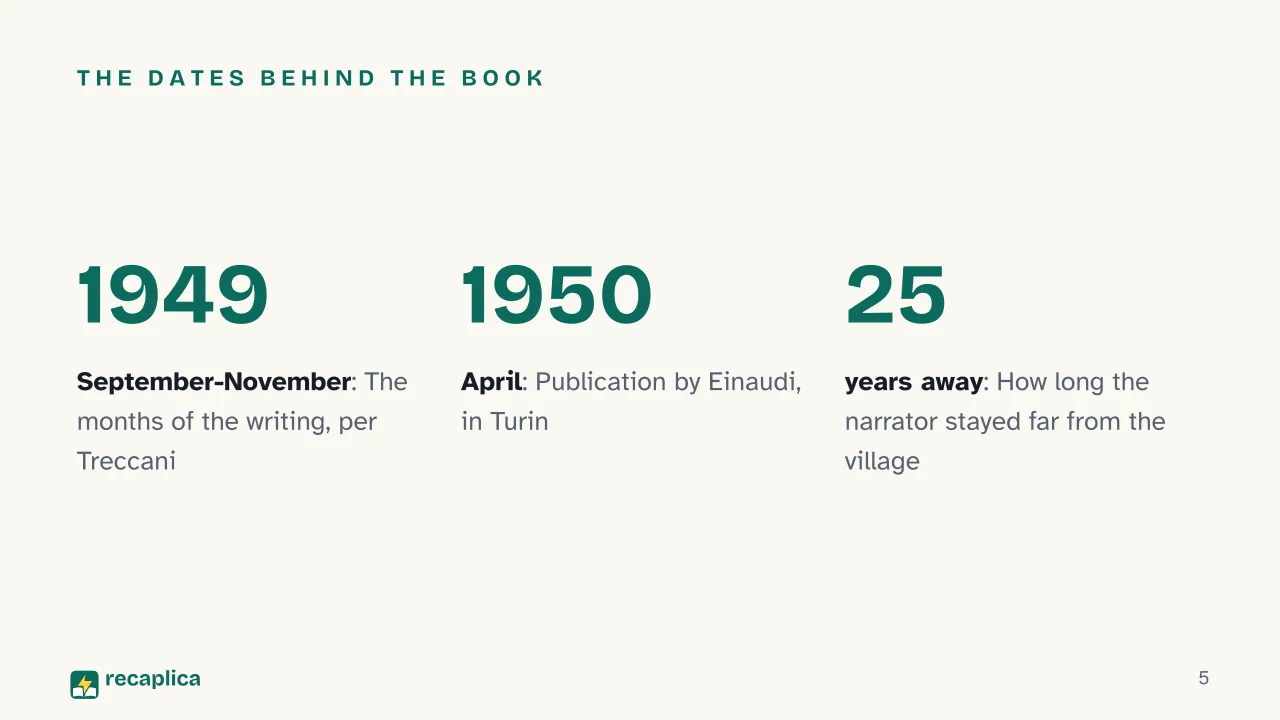  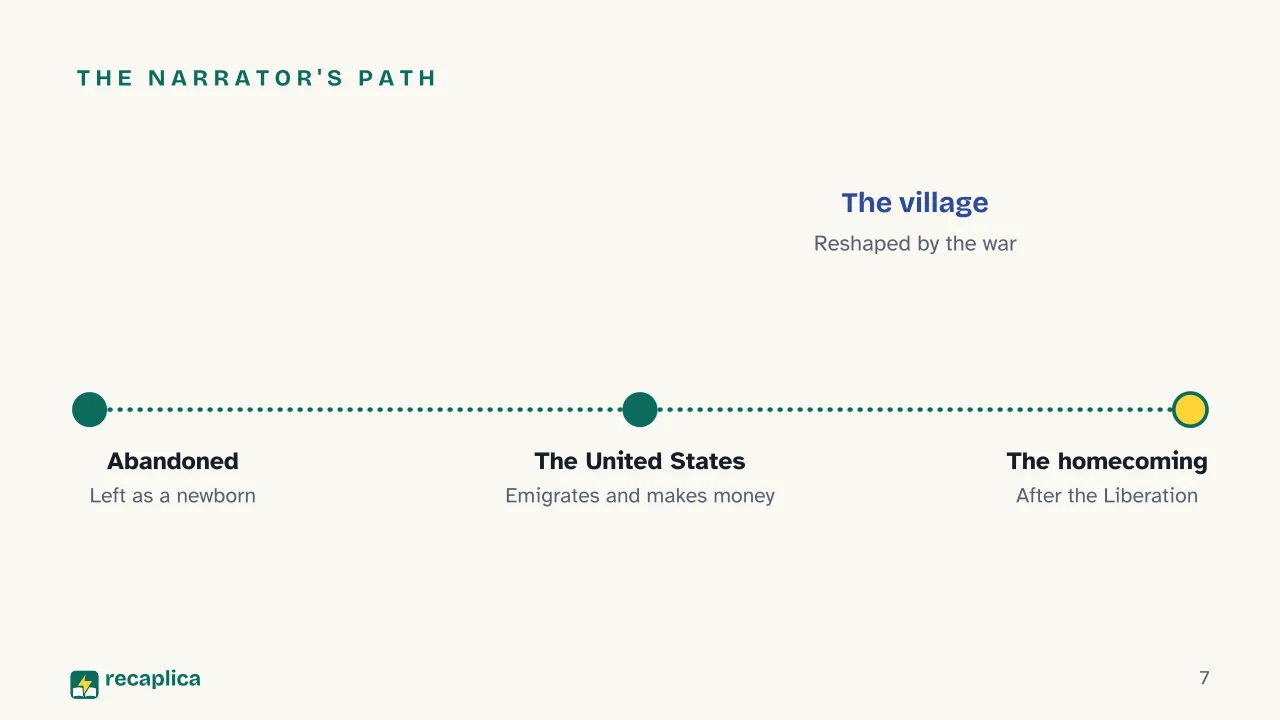 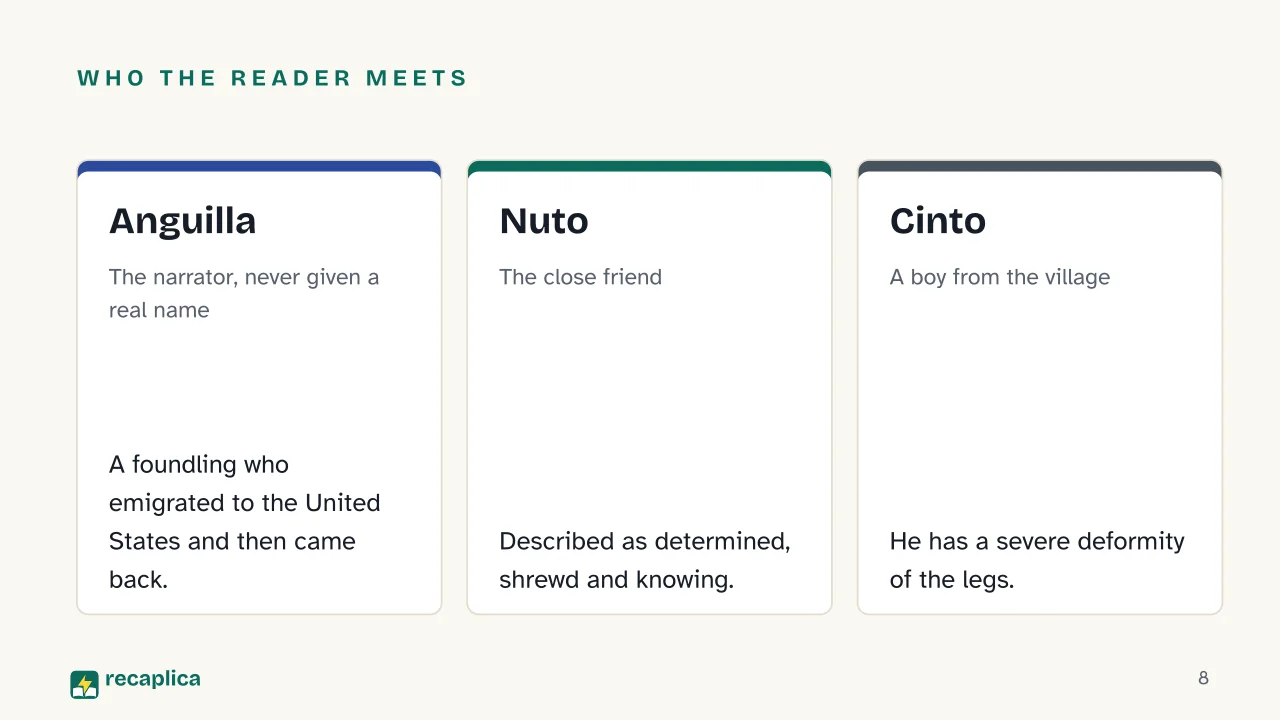 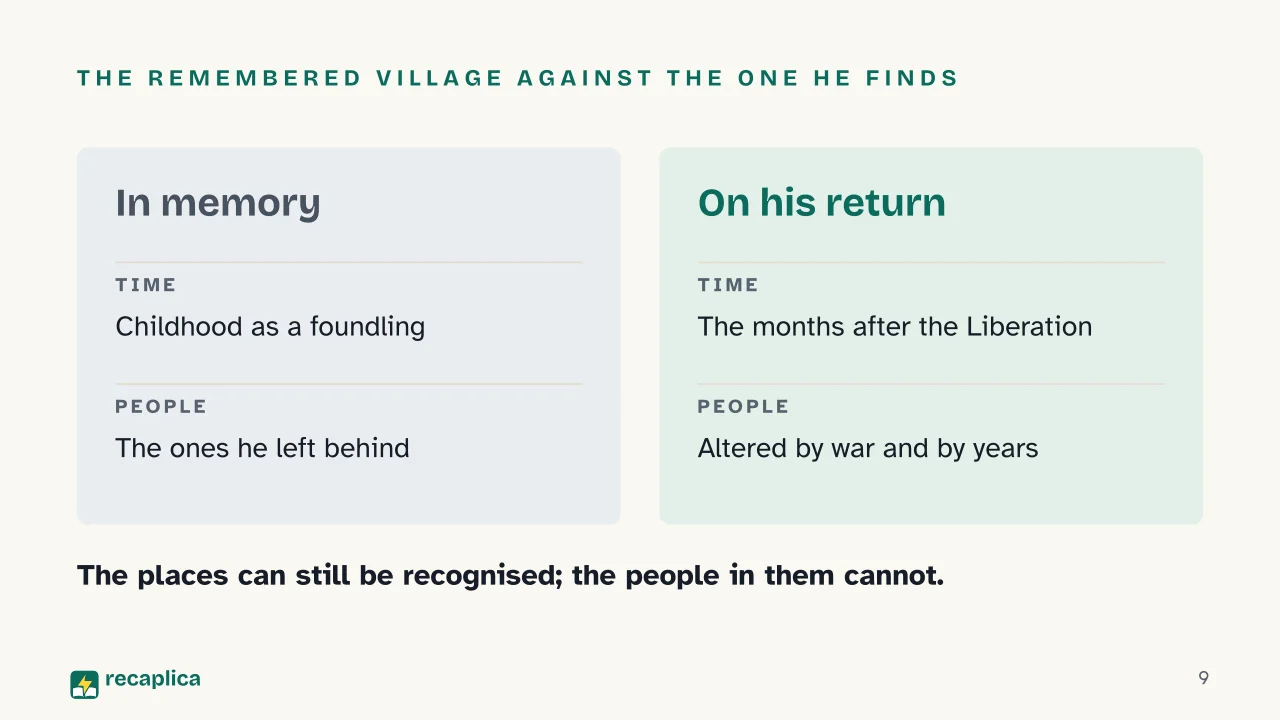  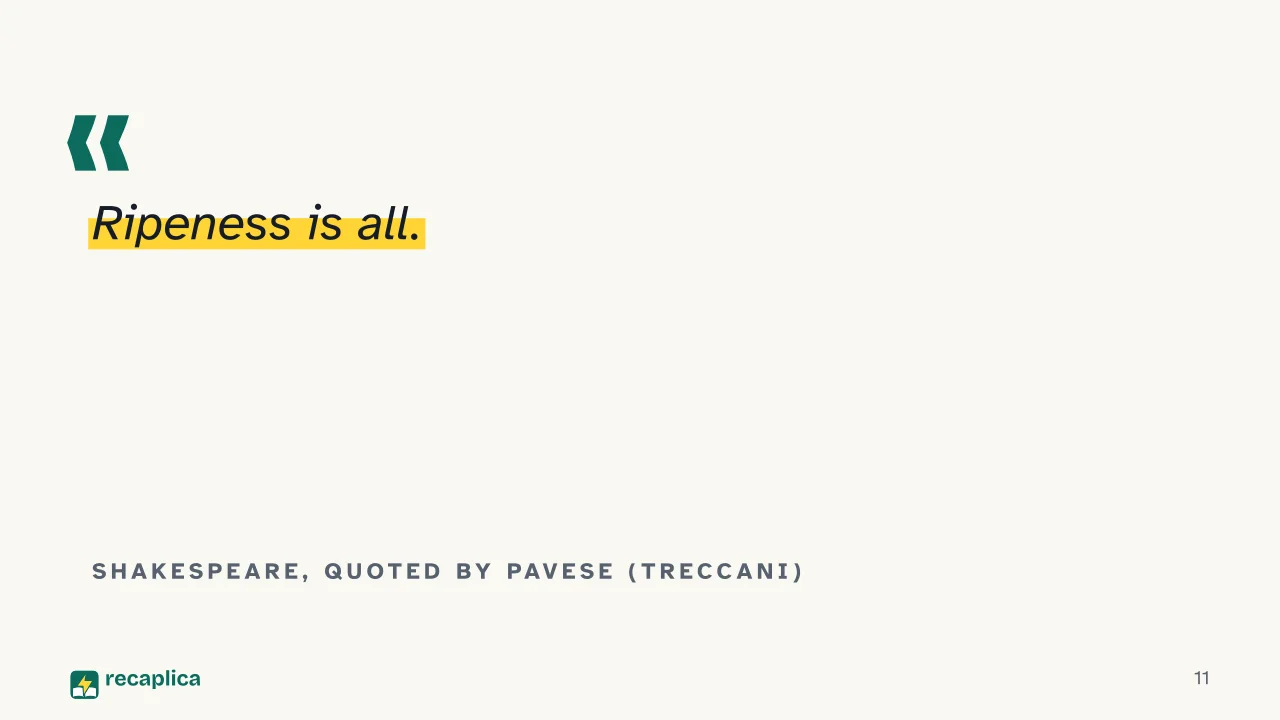  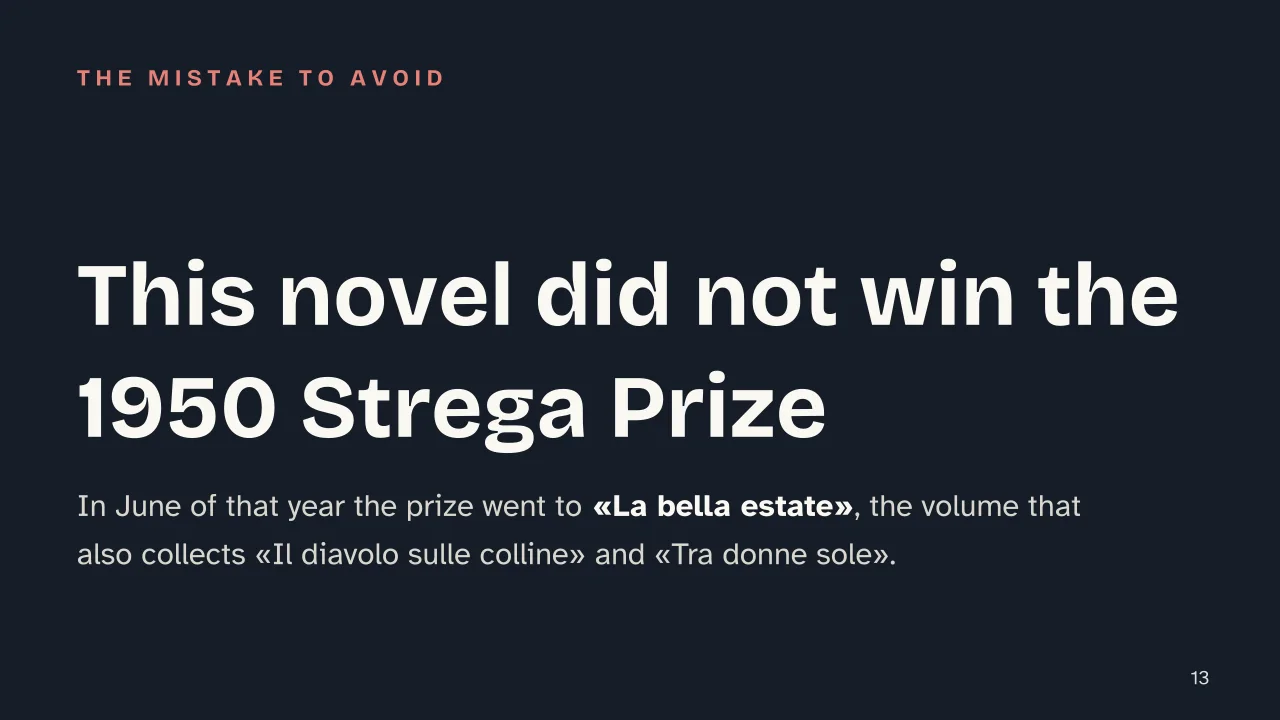 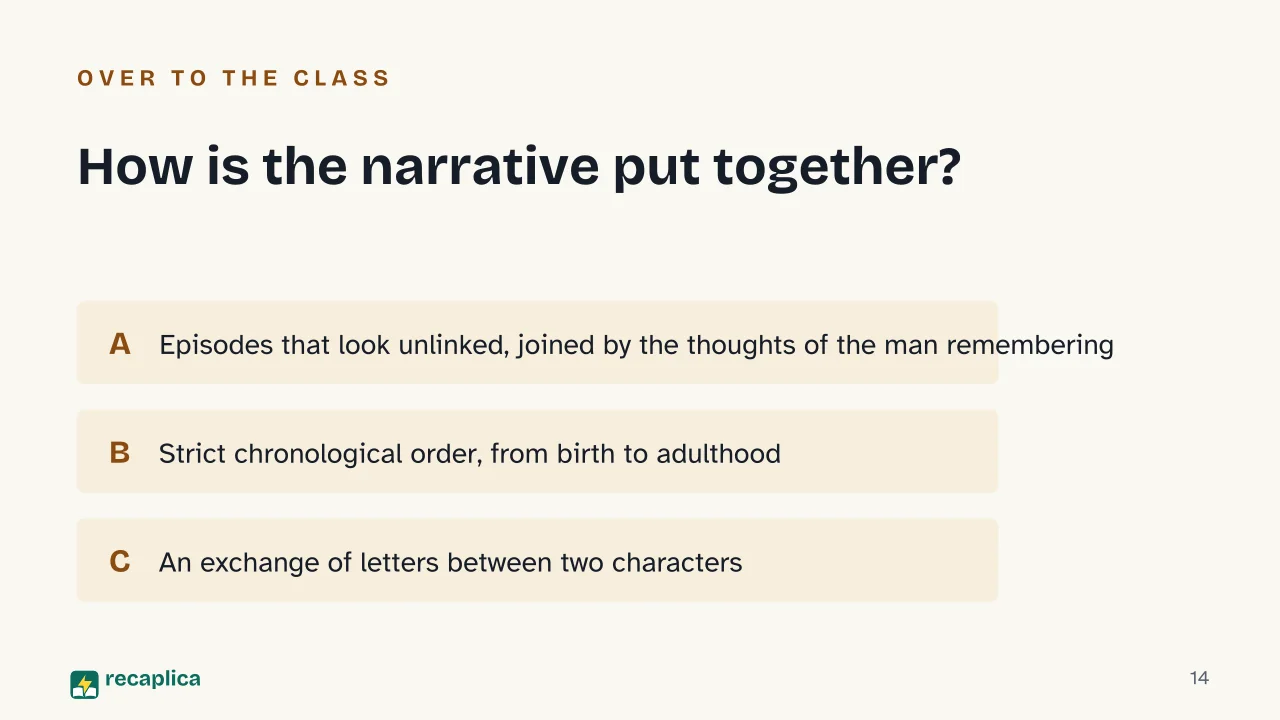  Common myths
Mind mapDrag the background to move around and the nodes to reposition them; use − and + to collapse and expand branches. 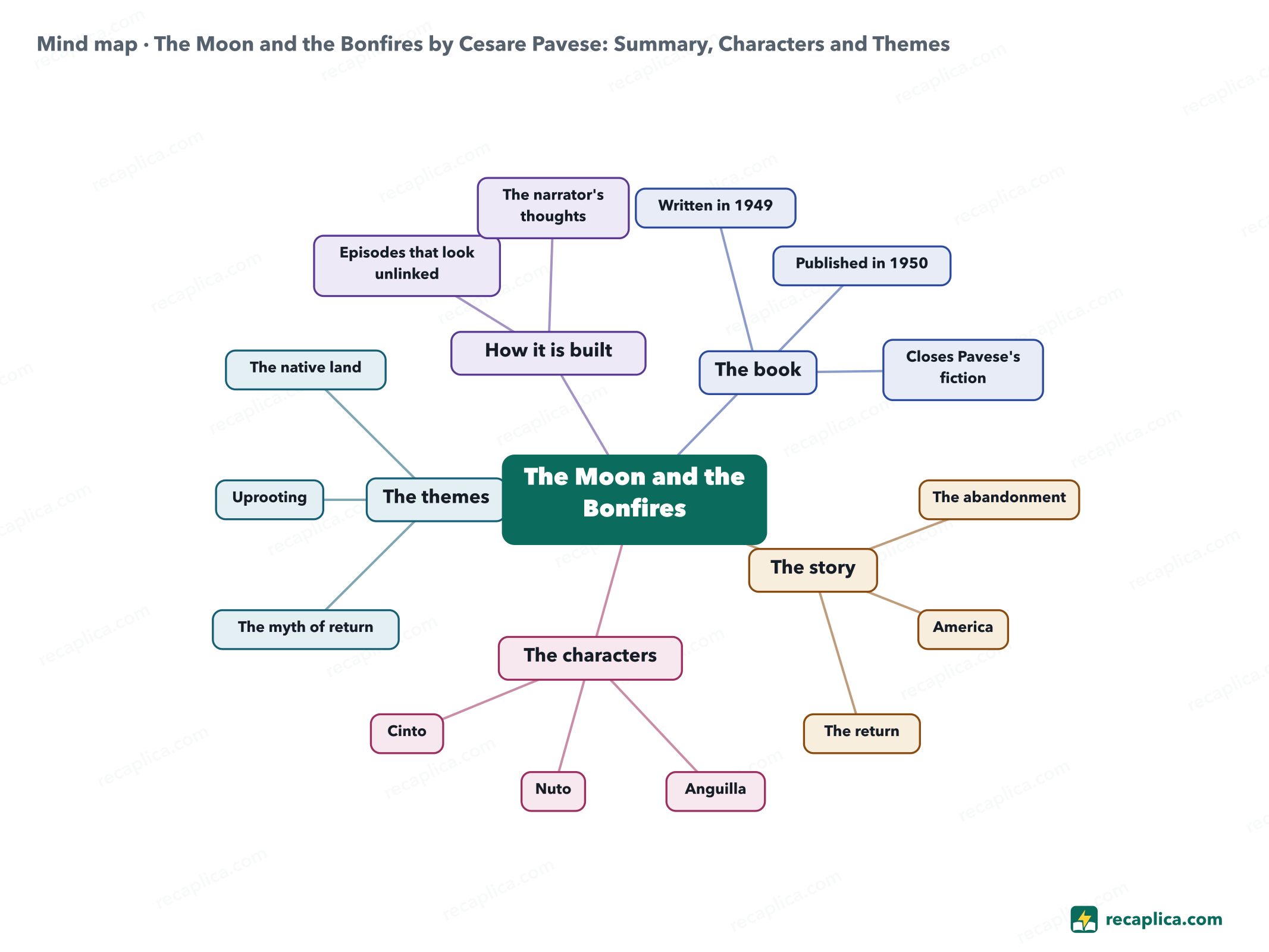
Quiz: test yourselfAnswer the questions to check what you have learned: you get instant feedback and a short explanation. Grade 0/10 0/5
FlashcardsTap the card to flip it and check whether you remember the answer, then move to the next one. 1 / 7 Explain it in your own wordsThe ultimate test: if you can explain it in simple words, you've truly understood it. Write your explanation, then compare it with the Recap. Your explanation is saved only on this device.
Frequently asked questionsWhat is «The Moon and the Bonfires» about?A man goes back to the village where he grew up after twenty-five years in the United States, where he had emigrated and made money. He arrives after the Liberation and finds that the war has changed both the place and the people in it. The book moves between that present and his childhood memories, starting from the abandonment that opened his life. Did «The Moon and the Bonfires» win the Strega Prize?No. In June 1950 the Strega Prize went to «La bella estate», a different book by Pavese. The confusion comes up often, because the two titles appeared within months of each other, but the sources consulted credit no prize to «The Moon and the Bonfires». Is it really Pavese's last book?It is his last novel and the book that closes his career as a novelist, as both the Dizionario Biografico degli Italiani and Wikipedia state. It appeared in April 1950; Pavese took his own life on 26-27 August of the same year. What is the narrator's name?It is never given. In the village they call him Anguilla, and that is the only way a reader can refer to him. English translations render the nickname as «Eel». When is the novel set?The present of the story is the post-war period, right after the Liberation. The narrator's memories reach much further back, to his childhood as a foundling and to the years before he emigrated. Every Recap goes through an independent review before publication. |