|
recaplica
How Much Does Italy's Regime Forfettario Really Cost? | |||||||||||||||||||||
| © 2026 Recaplica · recaplica.com — All rights reserved | |||||||||||||||||||||
How Much Does Italy's Regime Forfettario Really Cost?What to print Page numbers appear when printing with default margins. SlidesChoose a cut Flash10 slidesThe essential thread, to present in classFull15 slidesEvery chapter and the deeper detailBoth come with speaker notes. In 30 seconds quick readKeeping a VAT number under Italy's regime forfettario doesn't cost the same for everyone. Taxable income carries a substitute tax of 15%, cut to 5% for the first five years for those who meet certain conditions. The taxable base comes from applying a profitability coefficient to revenue that varies by activity, from 40% for trade up to 86% for construction: at the same revenue, a higher coefficient means a bigger tax bill. On top of that come social security contributions, with separate rates for tradespeople and shopkeepers and a reduction for those who stay in the scheme, plus a few recurring fixed costs that exist but carry no single amount set by any official source. Key Points
Key figures
Deep DiveAnyone who leaves a payroll job to go freelance, or steps into the labor market as self-employed from day one, and registers a VAT number under Italy’s regime forfettario already knows a substitute tax replaces the ordinary ones. What the headline rate alone doesn’t explain is how the actual bill gets worked out. Italy’s Revenue Agency (Agenzia delle Entrate) sets a single substitute tax on taxable income, replacing personal income tax (IRPEF), regional and municipal surtaxes, and the regional production tax (IRAP), at a standard rate of 15%. For the first five years of activity, the rate drops to 5% if certain conditions are met: no similar artistic, professional or business activity carried out in the previous three years; the new activity must not simply continue a job or freelance work already done before; and, when taking over an activity someone else started, the previous year’s revenue must stay under the threshold set for that sector. What actually moves the final bill is something else: the tax isn’t calculated on revenue, but on taxable income obtained by applying a profitability coefficient that differs for each type of activity, according to the Revenue Agency’s official table. Wholesale and retail trade carries a coefficient of 40%; professional, scientific, technical, healthcare and education activities sit at 78%; construction and real estate reach 86%; trade intermediaries stop at 62%; food and beverage manufacturing stays at 40%, same as accommodation and catering services. At the same revenue, a higher coefficient produces higher taxable income, and therefore a bigger tax bill.
The coefficient is therefore no minor technical detail: it’s the variable that decides, more than the rate itself, how much the scheme really costs for a given activity. The revenue thresholds in the official table are the original ones from the law, tied to the 2007 ATECO activity codes: anyone weighing whether to register for VAT should check, alongside the coefficient, the general revenue limit of the regime forfettario, which applies to every activity. Alongside the substitute tax come social security contributions. For tradespeople and shopkeepers, INPS applies its own rates: in 2026, 24% for tradespeople and 24.48% for shopkeepers, calculated on a minimum income of 18,808 euros a year, revalued annually in line with consumer prices (the same mechanism that, on the other side of the ledger, drives the inflation people talk about when prices climb). Those who stay in the regime forfettario, if they already benefited from it the previous year and still meet the requirements, can request a 35% contribution reduction: it isn’t automatic, it has to be requested, and it remains a reduction, not an exemption from contributions. Freelancers without a professional pension fund of their own, enrolled instead in INPS’s Gestione Separata, pay different rates from tradespeople and shopkeepers: a dedicated Recap on regime forfettario INPS contributions covers that calculation in detail, including the Gestione Separata case, which this piece leaves aside for lack of a verified official source at the time of writing. Finally, a few recurring fixed costs exist that no institutional source consulted quantifies in a single, consistent figure. The most common is the accountant’s fee, for handling the tax filings of someone in the regime forfettario: not required by law, but common in practice. Anyone running a business or trade activity typically also owes an annual Chamber of Commerce registration fee, of variable amount. For an up-to-date estimate of these items, it’s worth asking a professional directly, since costs shift with the type of activity and the region. Taken together, the real cost of a regime forfettario VAT number doesn’t reduce to a single percentage: it depends on the profitability coefficient of the activity in question, whether the reduced rate applies, the INPS rates for that sector, and the running costs that sit outside the strict tax calculation. Slide deckSlides ready to download and make your own in PowerPoint or Google Slides, with speaker notes. Pick the Flash cut or the Full one.   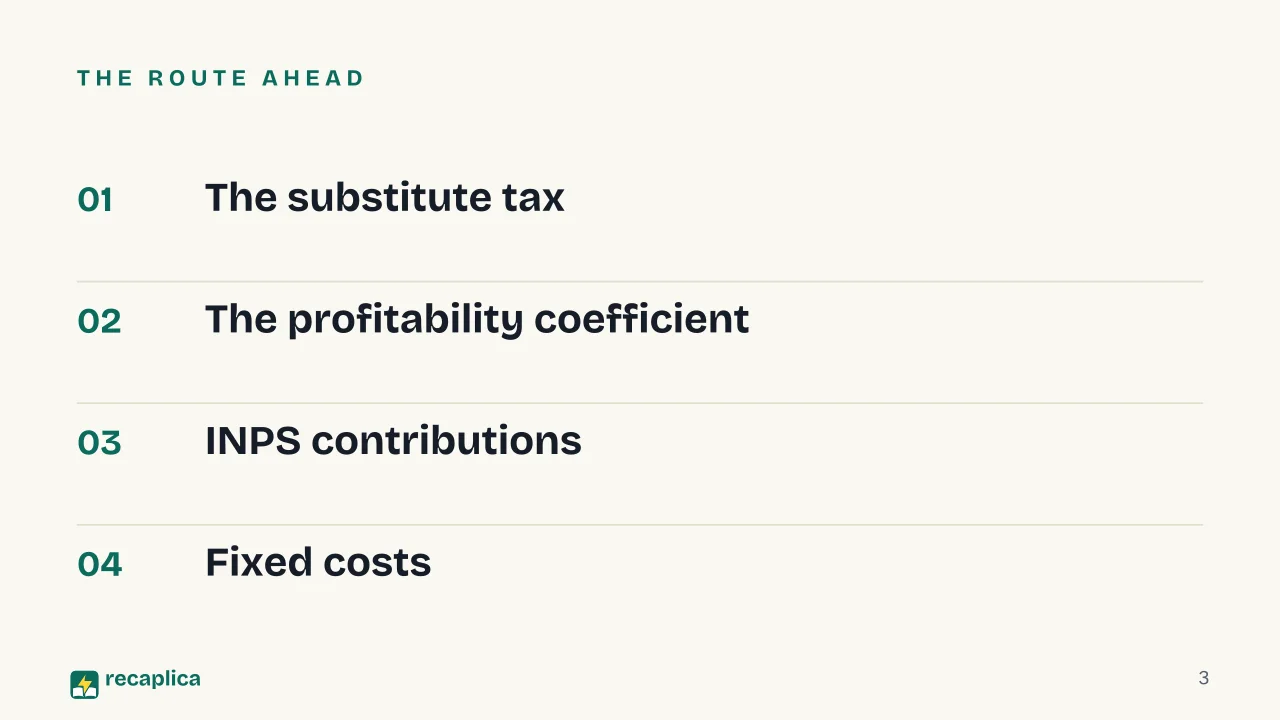  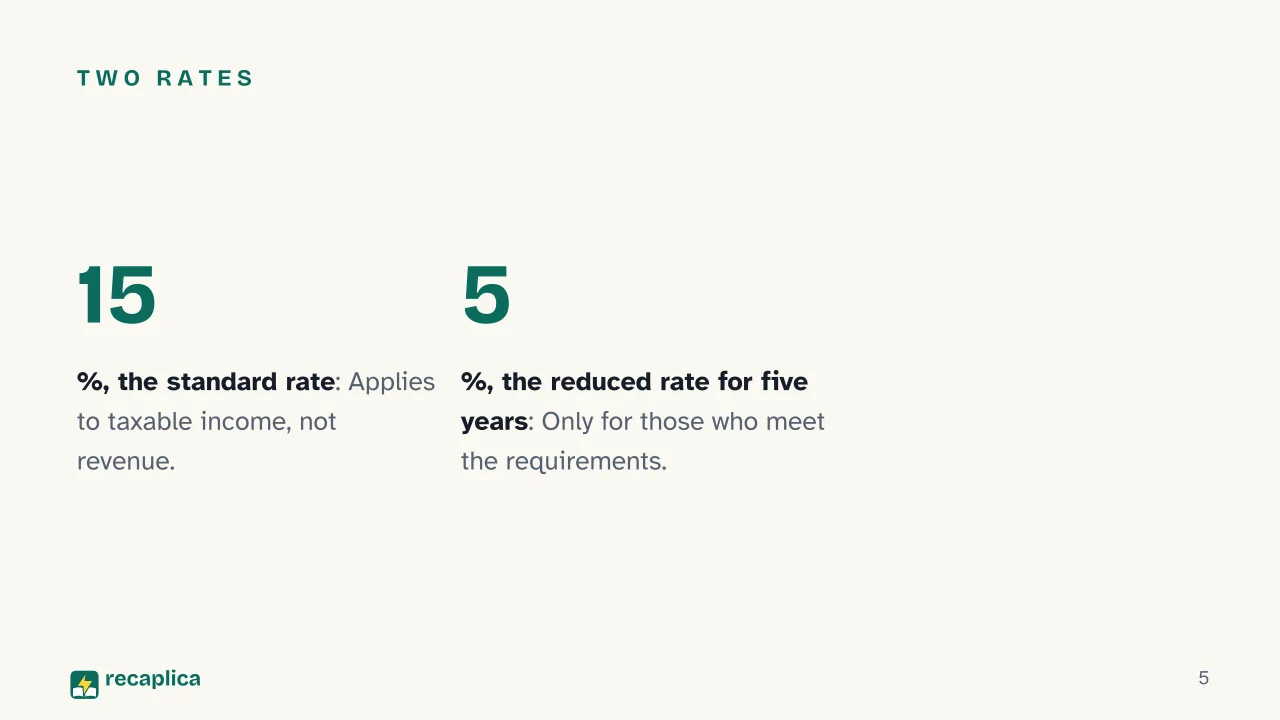 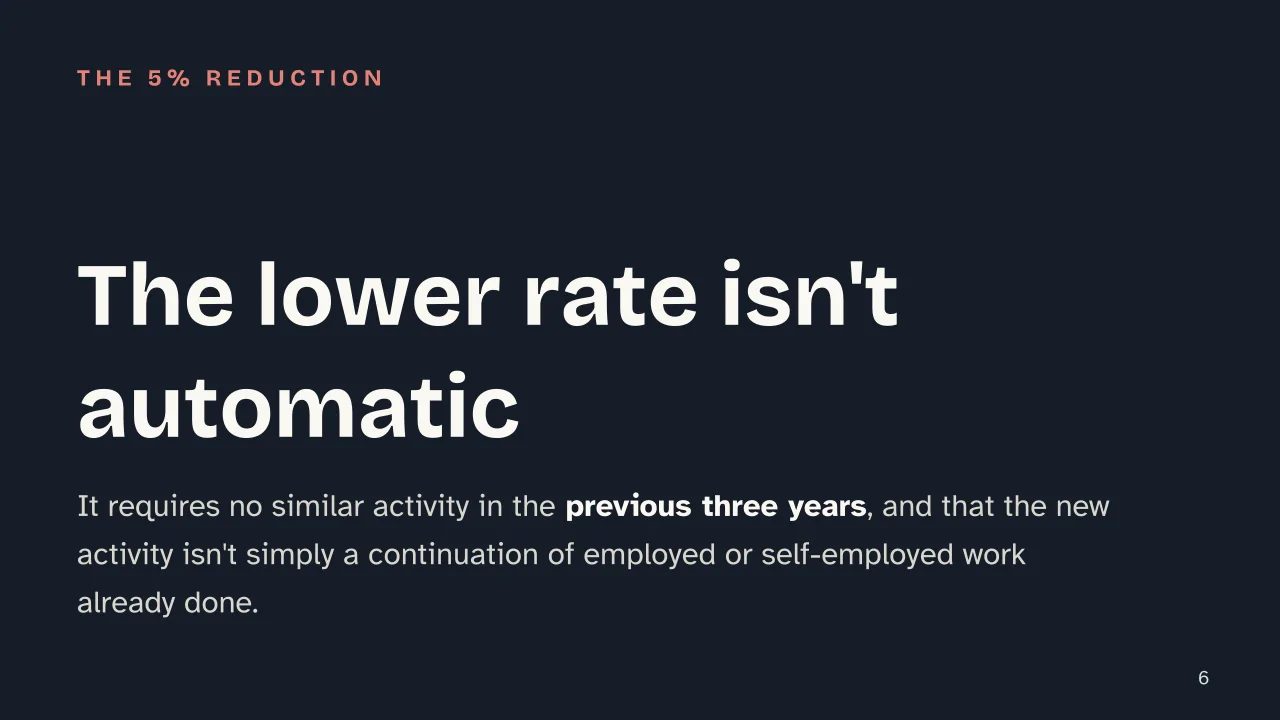  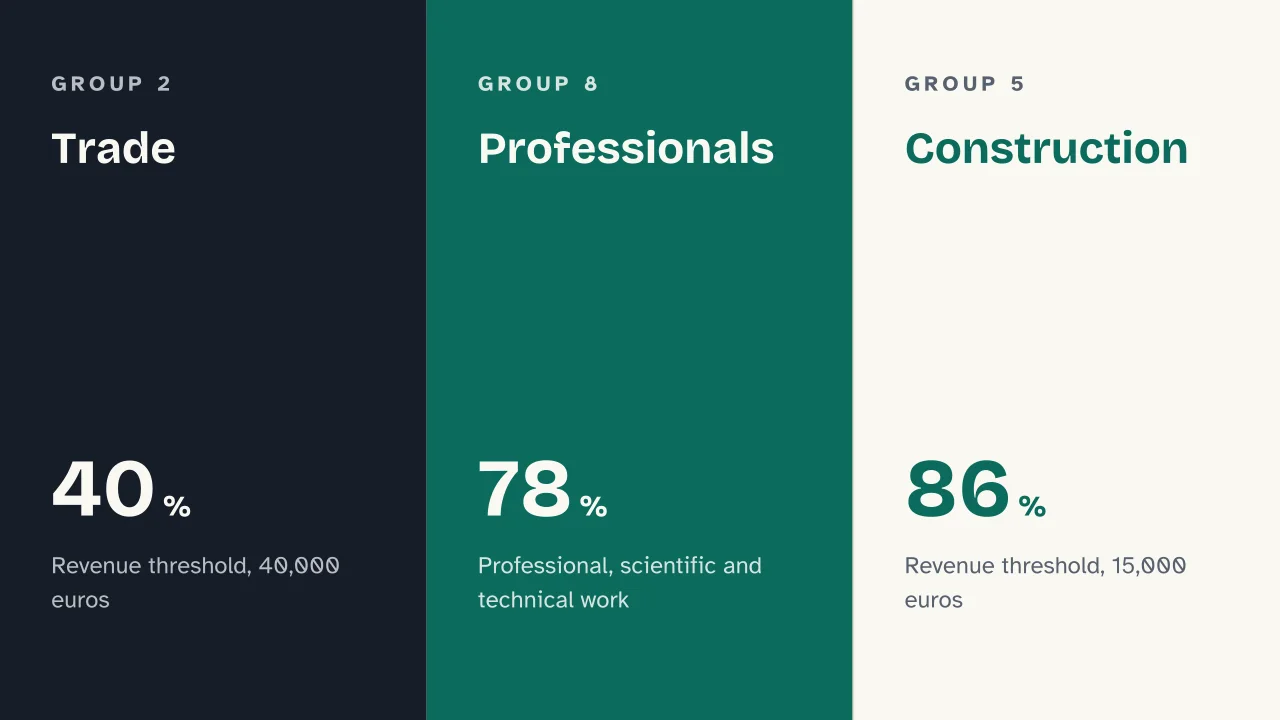 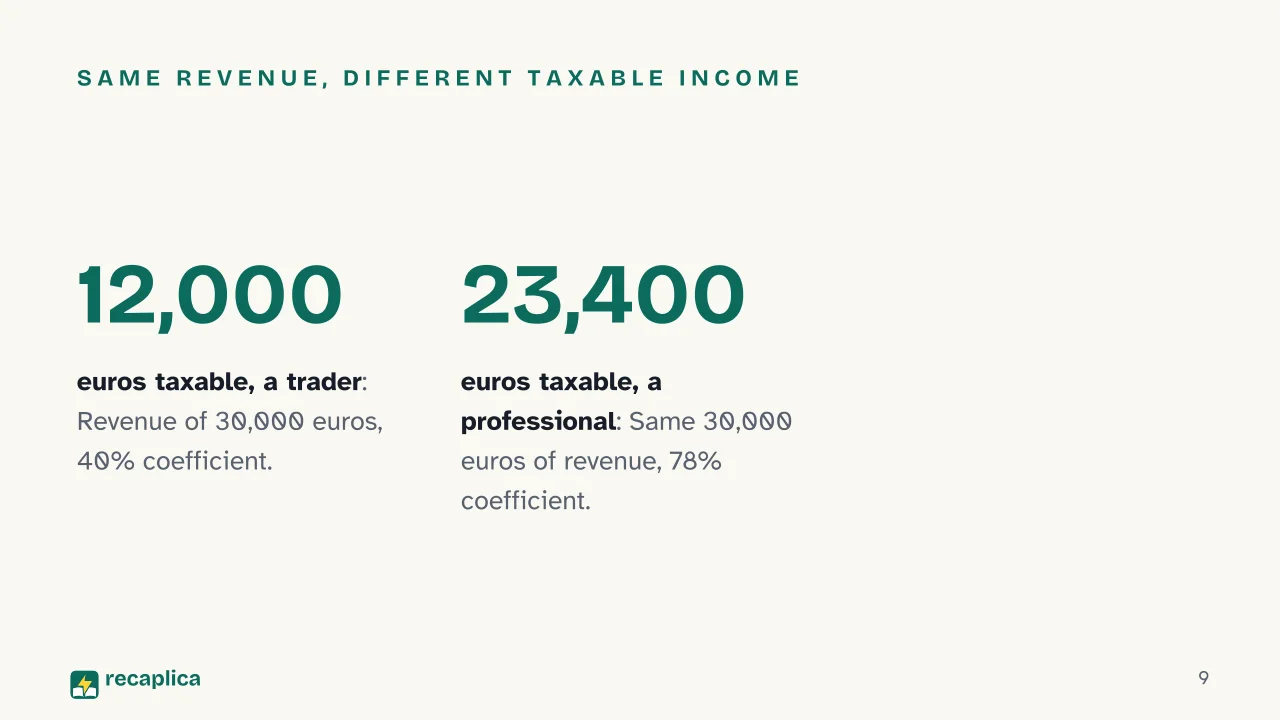  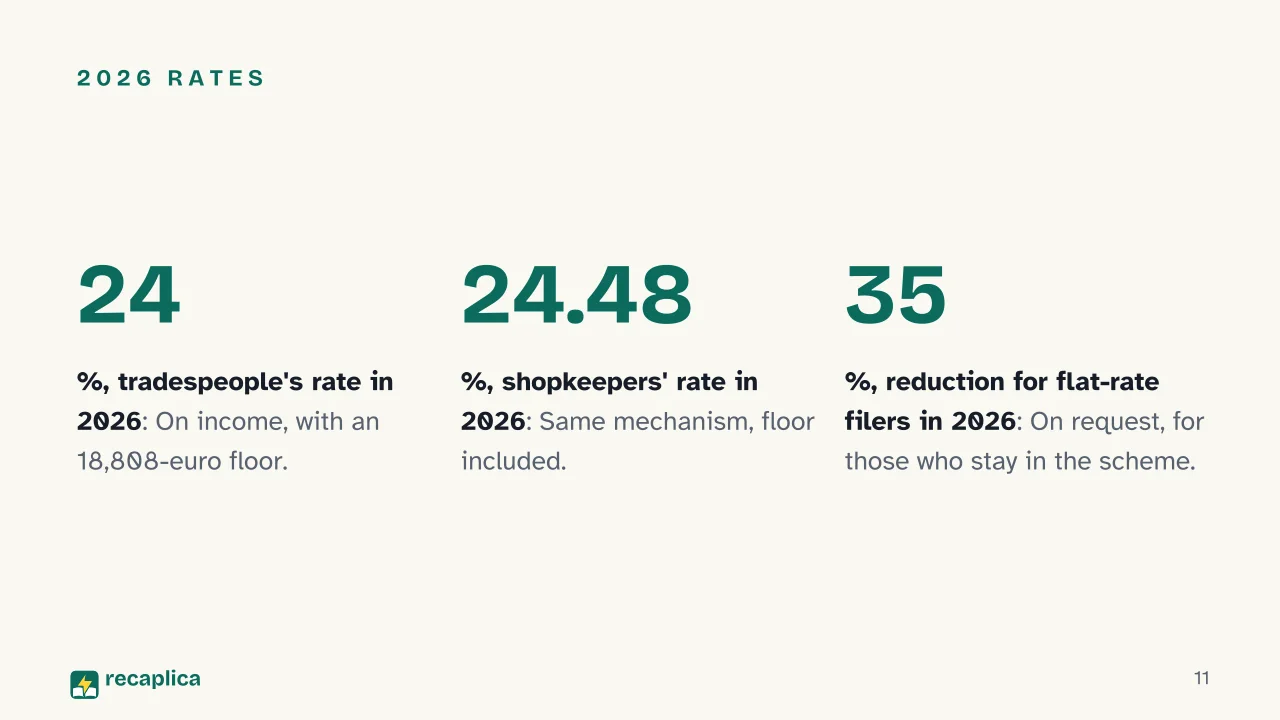  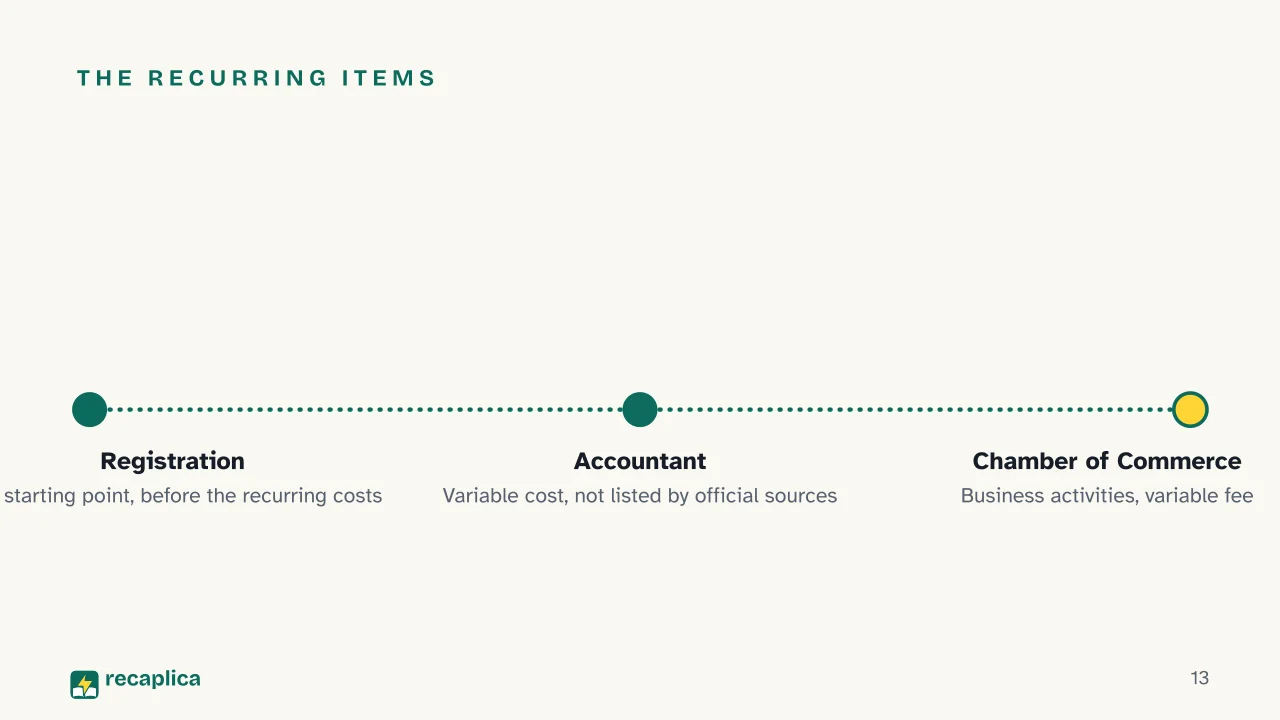 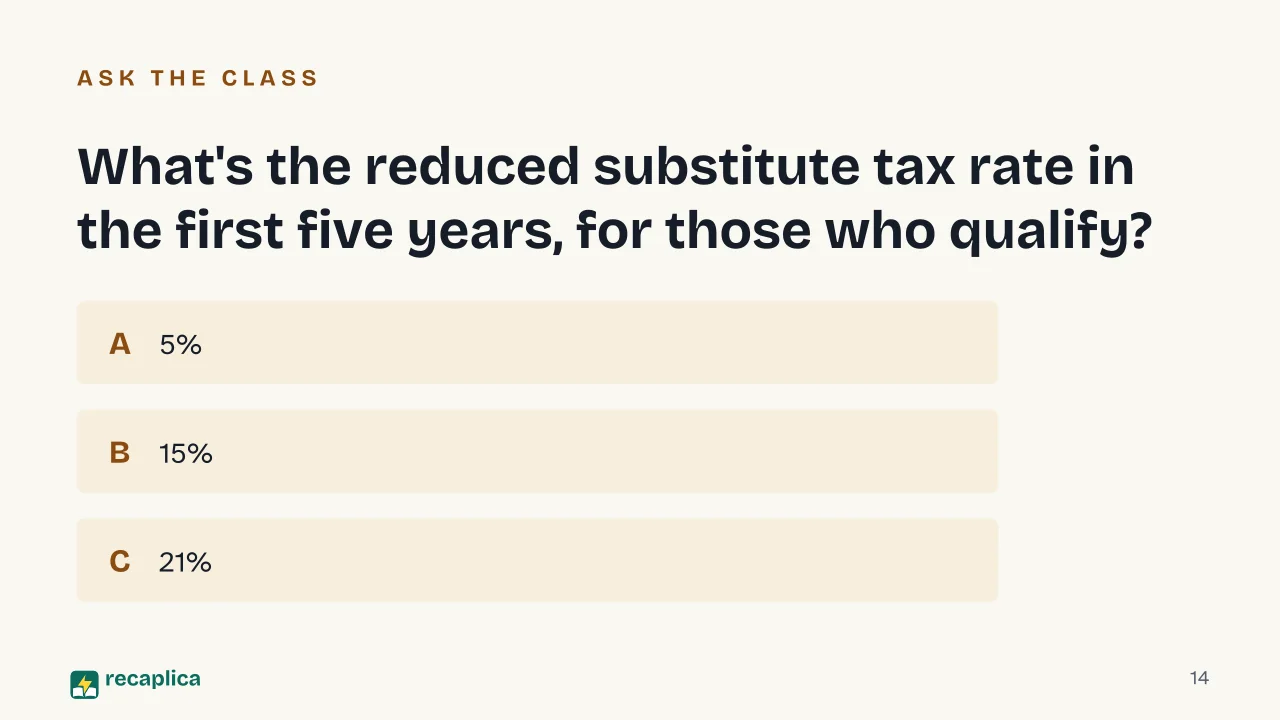  Common myths
Mind mapDrag the background to move around and the nodes to reposition them; use − and + to collapse and expand branches. 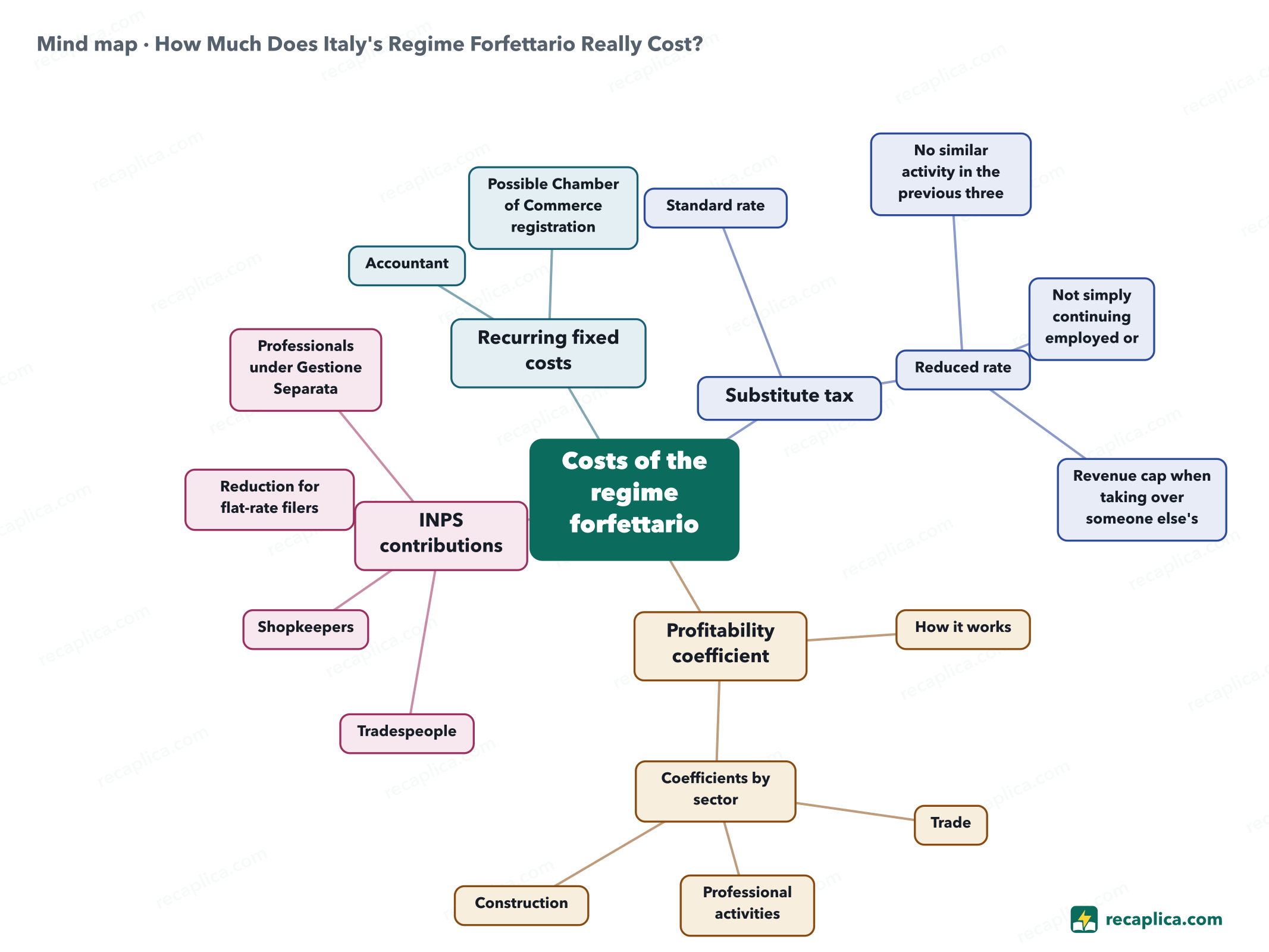
Quiz: test yourselfAnswer the questions to check what you have learned: you get instant feedback and a short explanation. Grade 0/10 0/5
FlashcardsTap the card to flip it and check whether you remember the answer, then move to the next one. 1 / 8 Explain it in your own wordsThe ultimate test: if you can explain it in simple words, you've truly understood it. Write your explanation, then compare it with the Recap. Your explanation is saved only on this device.
Frequently asked questionsHow much tax do you pay under the regime forfettario?You pay a substitute tax of 15% on taxable income, reduced to 5% for the first five years of activity if certain requirements are met. Taxable income is worked out by applying a profitability coefficient to revenue, which varies by type of activity. How is tax calculated under the regime forfettario?Start from the year's revenue or fees collected, apply the profitability coefficient set for your ATECO code to get taxable income, then calculate the substitute tax (15% or 5%) on that amount. What are the INPS contributions under the regime forfettario?For tradespeople and shopkeepers, the 2026 rates are 24% and 24.48% respectively, with a 35% contribution reduction for those who stay in the scheme. Professionals enrolled in the Gestione Separata, who pay different rates, are covered in a dedicated Recap on INPS contributions under the regime forfettario. How much does an accountant cost for a regime forfettario VAT number?There's no official amount set by any institutional source: the fee depends on the professional you choose and the services you need. For an up-to-date figure, ask for a direct quote or check with your local Chamber of Accountants (Ordine dei Commercialisti). Does the regime forfettario have other fixed costs beyond taxes?Yes: besides the substitute tax and INPS contributions, there are costs such as an optional accountant and, for anyone running a business or trade activity, Chamber of Commerce registration. No official source consulted reports a single reference amount for these items. Every Recap goes through an independent review before publication. |