|
recaplica
Welfare State: What It Is and How It Works | ||||||||||||
| © 2026 Recaplica · recaplica.com — All rights reserved | ||||||||||||
Welfare State: What It Is and How It WorksWhat to print Page numbers appear when printing with default margins. SlidesChoose a cut Flash10 slidesThe essential thread, to present in classFull15 slidesEvery chapter and the deeper detailBoth come with speaker notes. In 30 seconds quick readA welfare state is the set of public policies through which a state provides social protection to its citizens across the different stages of life, from healthcare to old age. It began in Germany in the 1880s, when Chancellor Otto von Bismarck pushed through three laws insuring workers against sickness, workplace accidents, and invalidity and old age. In the United Kingdom, the Beveridge Report, presented to parliament in November 1942, laid the groundwork for a more universal model, extended to the whole population. The International Labour Organization frames welfare policy around four functions: healthcare, support for children and education, income security for working-age adults, and pensions. Public social spending has grown sharply across OECD countries, from under 10% of GDP in 1960 to over 30% in France and Italy in 2022. Key Points
Key figures
Deep DiveThe first social laws, in GermanyToward the end of the nineteenth century, German factories imposed long shifts, often twelve or fourteen hours, in conditions that damaged workers’ health. According to the Deutsches Historisches Museum, these conditions fed recurring protests and strikes throughout the nineteenth century. It was in this climate that Chancellor Otto von Bismarck pushed through three laws that, one after another, covered the main risks a worker faced. In 1883 the Reichstag passed the sickness insurance law, which applied to workers employed for more than a week and earning below a set income threshold. According to the Deutsches Historisches Museum, the law brought 4.7 million industrial workers under compulsory coverage. A year later, in 1884, the accident insurance law took effect: in the event of a workplace accident, a worker received compensation regardless of who was at fault, starting from the fourteenth week, once sickness coverage ran out. The third law, on invalidity and old-age insurance, arrived in 1889. German sources disagree on the exact day of approval, giving dates in both May and July, but it is certain that the law followed a large strike by miners in the Ruhr coalfield. The resulting pension was modest: according to the Bundeszentrale für politische Bildung, after thirty years of contributions it covered only a fifth or a sixth of previous earnings. Bismarck was no revolutionary. According to the Deutsches Historisches Museum, the reasoning behind his laws was that workers would feel more bound to the state if it guaranteed them a degree of security: the three laws were a tool for political stability. The British model and the Beveridge ReportMore than fifty years later, in the United Kingdom, an inter-departmental committee on social insurance and allied services, chaired by economist William Beveridge, presented a report to parliament: it was November 1942, in the middle of the war. According to the Modern Records Centre at the University of Warwick, the report proposed a new type of welfare state, with social insurance covering every stage of life and the stated aim of preventing a return of the widespread poverty seen during the prewar economic depression. The report received broad support and is regarded, according to the same source, as the foundation document for the welfare state built by the Labour government between 1945 and 1951. Unlike the German model, built insurance scheme by insurance scheme and tied to employment, the British approach aimed at more uniform coverage, extended to the population as a whole.
The welfare state’s four functionsAccording to the International Labour Organization, a social protection system guarantees, as a minimum, access to essential healthcare and income security across a person’s entire life. Four functions follow from this definition, showing up in different proportions in every OECD country: healthcare, support for children and education, income support for people of working age who cannot earn enough on their own (covering sickness, unemployment, maternity and disability), and pensions for old age. These four functions are closely tied to a country’s economic policy choices: spending on income support tracks the ups and downs of the labor market. Three models of welfareIn 1990, sociologist Gøsta Esping-Andersen proposed a classification of welfare systems into three groups of countries, distinguished by how the state, the market and the family divide up the task of providing social protection.
The liberal model, according to academic research published by Cambridge Core, rests on means-tested assistance and modest universal transfers, aimed mainly at a lower-income segment of the population. The social democratic model, typical of the Nordic countries, instead grew out of a left-wing political coalition strong enough to push through universalistic social policies. The third model, the conservative-corporatist one, builds social protection around employment and contributions paid over a career: it is the same logic as the Bismarckian insurance schemes described earlier, widespread across several continental European countries. How much OECD countries spendAccording to the OECD, in 1960 public social spending across member countries averaged under 10% of GDP. In 2022, France and Italy led the OECD ranking, with public social spending above 30% of GDP; at the opposite end, Costa Rica, Ireland, Korea, Mexico and Türkiye stayed under 15%. The Covid-19 pandemic left a visible mark on the time series: still according to the OECD, average social spending rose from 20% of GDP in 2019 to 23% in 2020, before an estimated fall to 21% in 2022. These differences between countries don’t reflect the generosity of benefits alone: they also mirror how each country deals with inequality and poverty, and the broader economic policy choices that, in the decades after the Second World War, often drew on Keynesian ideas about the state’s role in the economy. Slide deckSlides ready to download and make your own in PowerPoint or Google Slides, with speaker notes. Pick the Flash cut or the Full one.     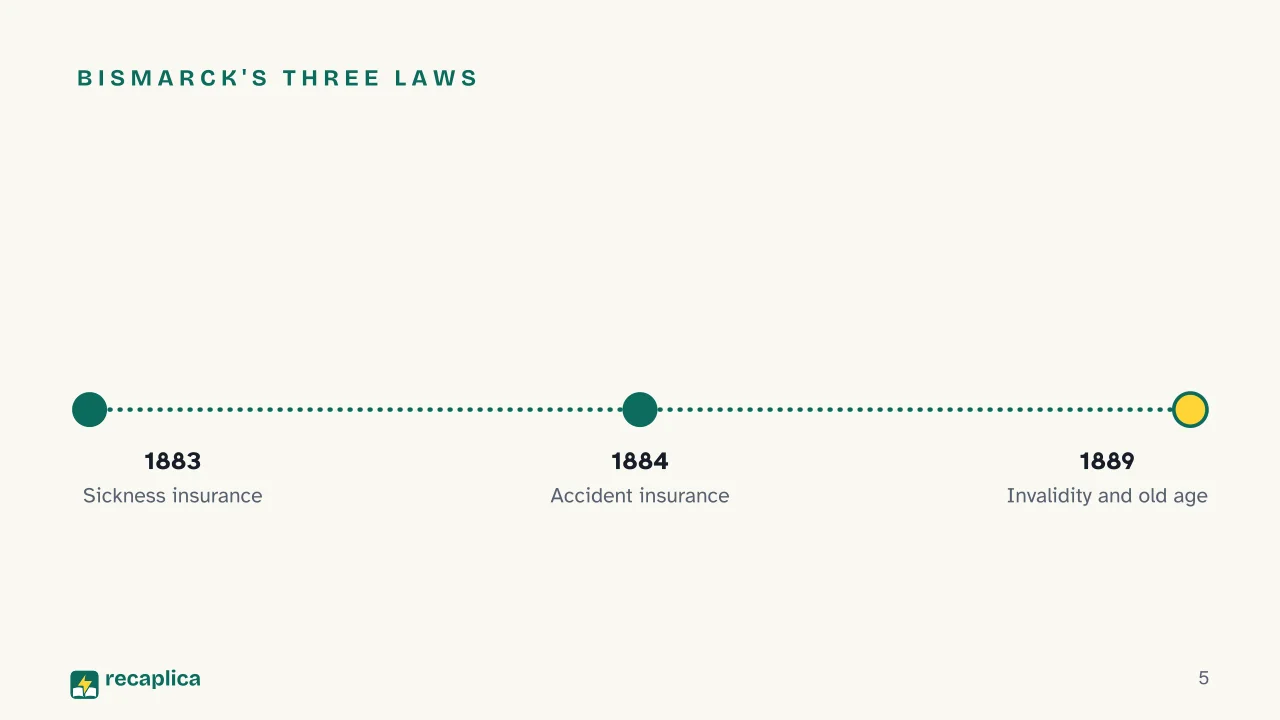 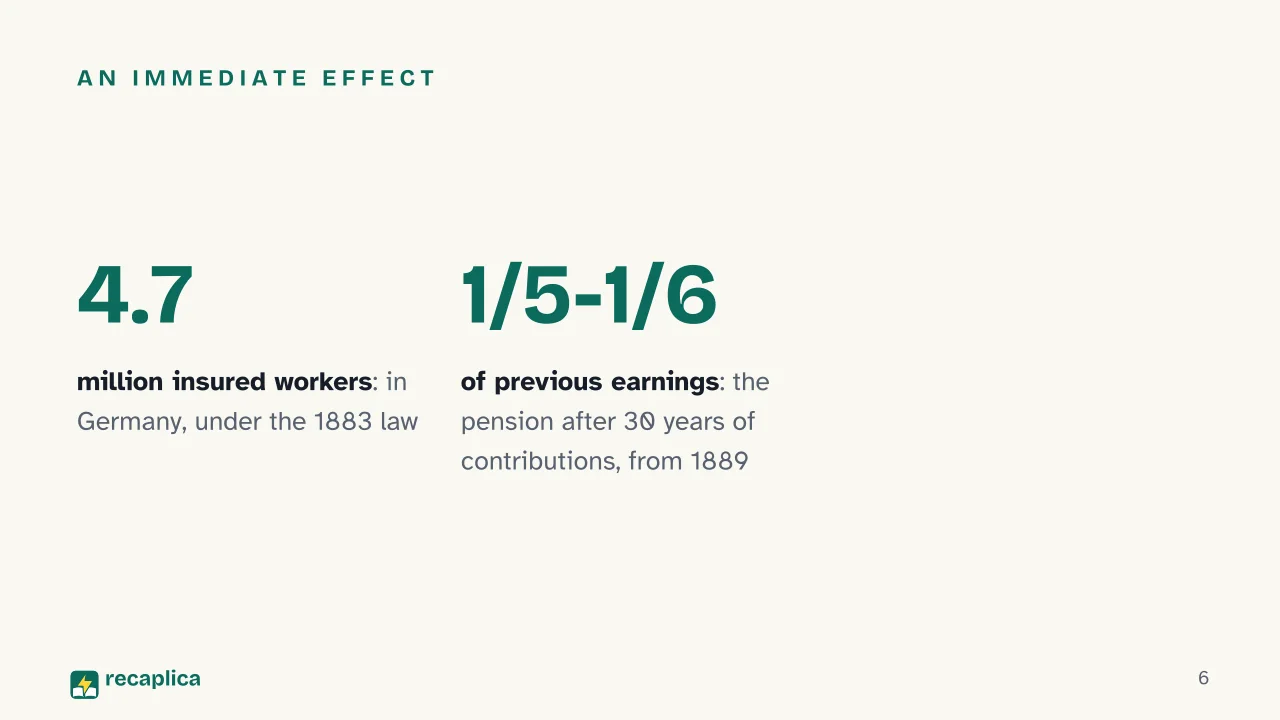 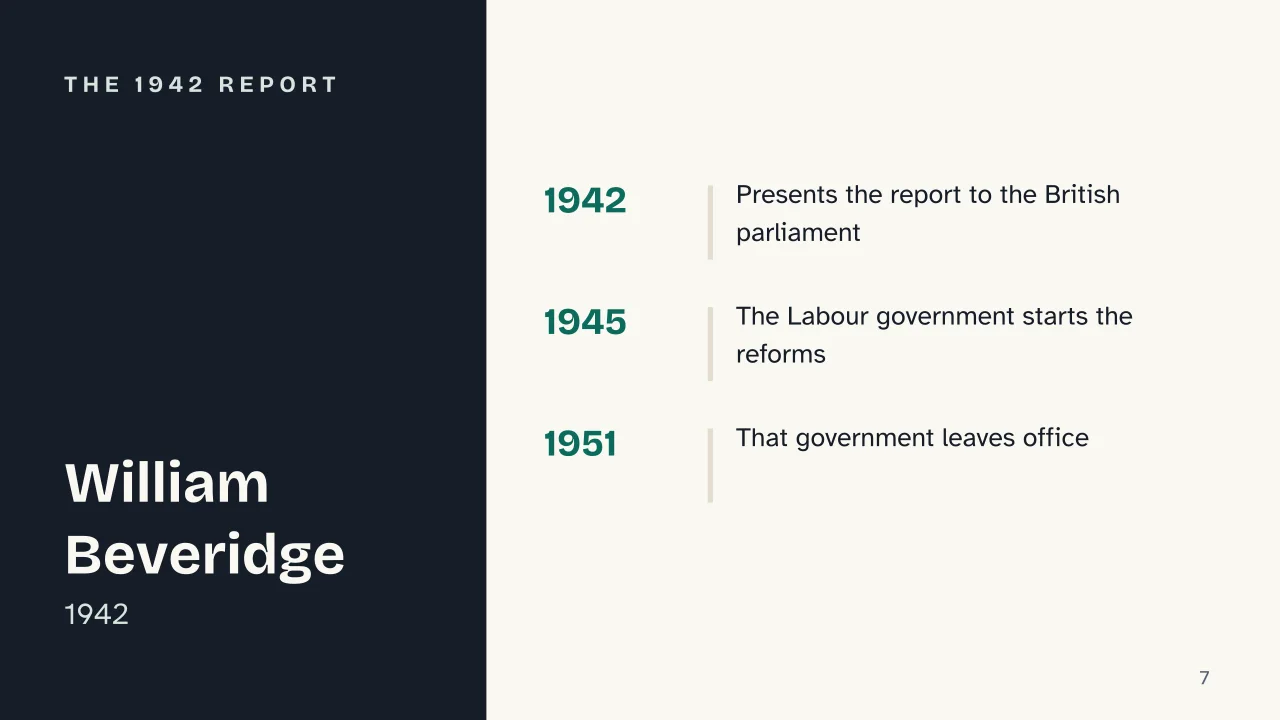 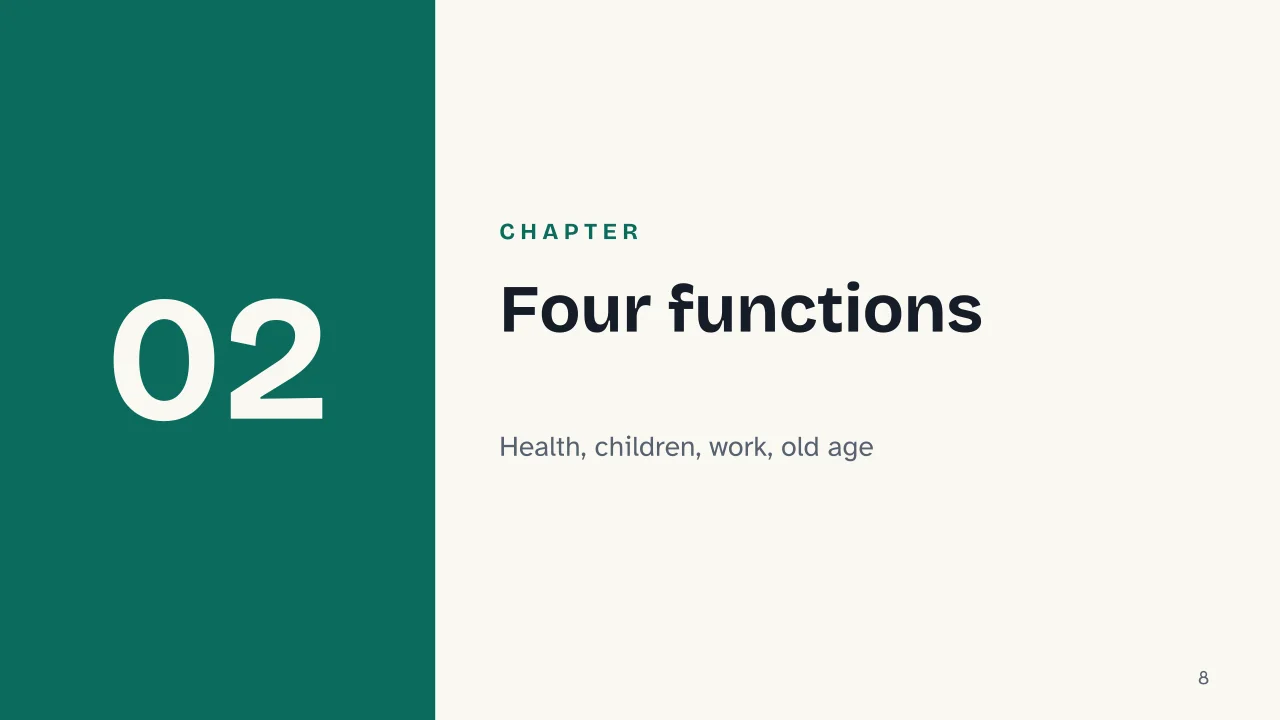 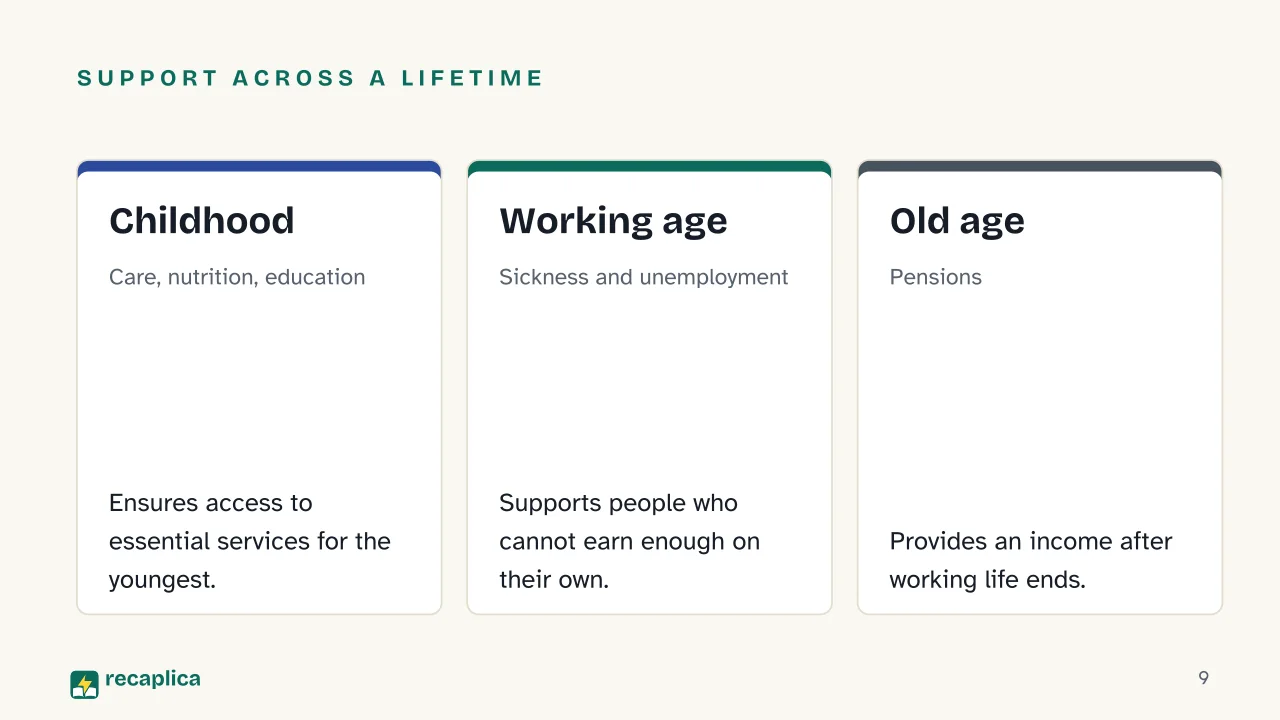   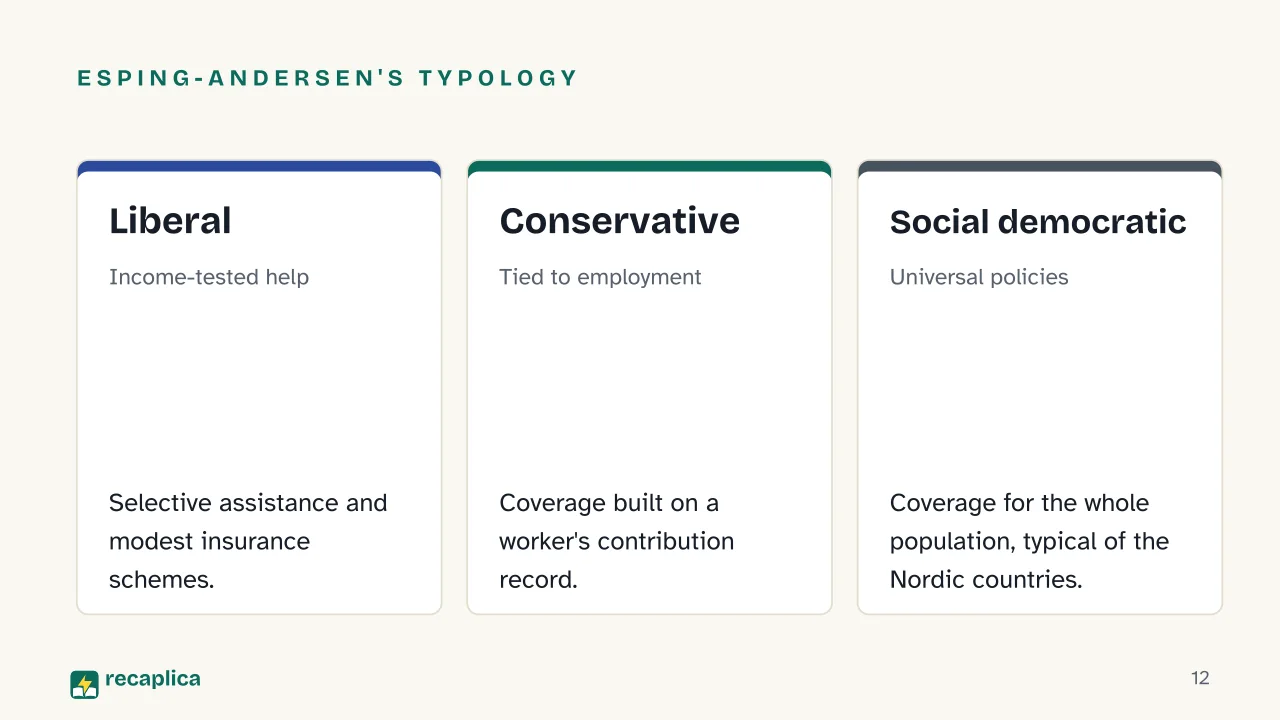 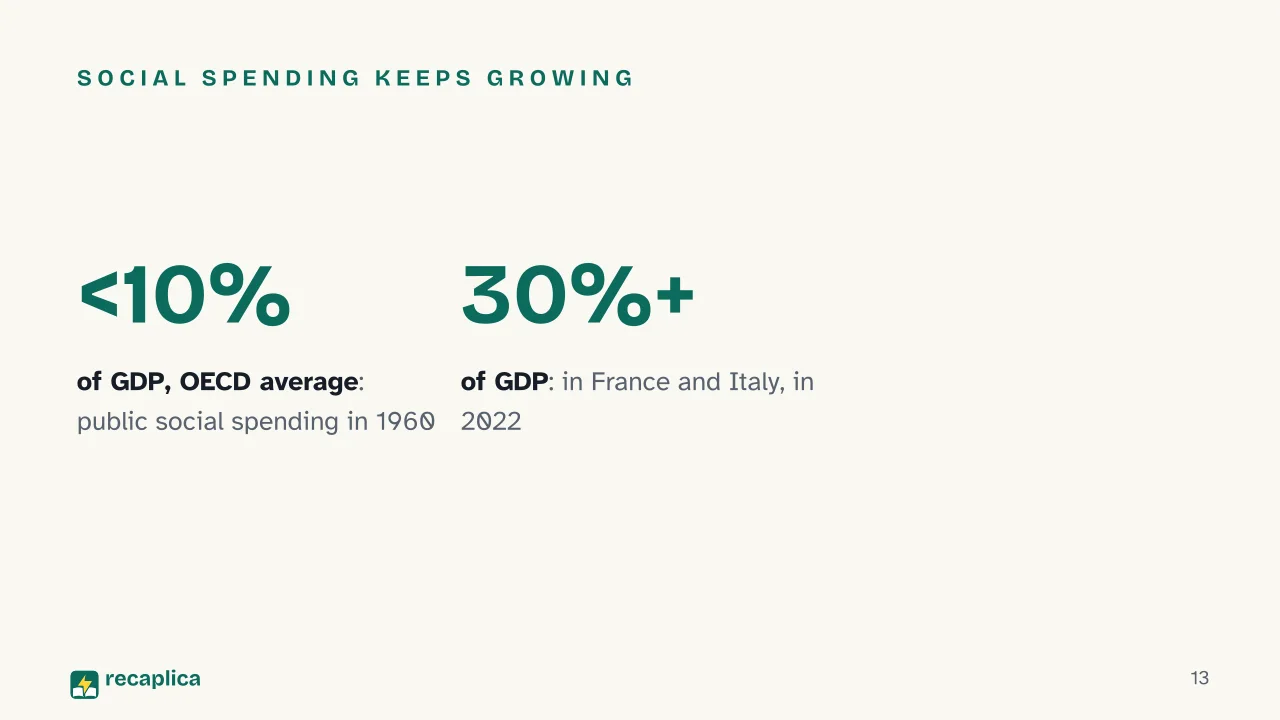 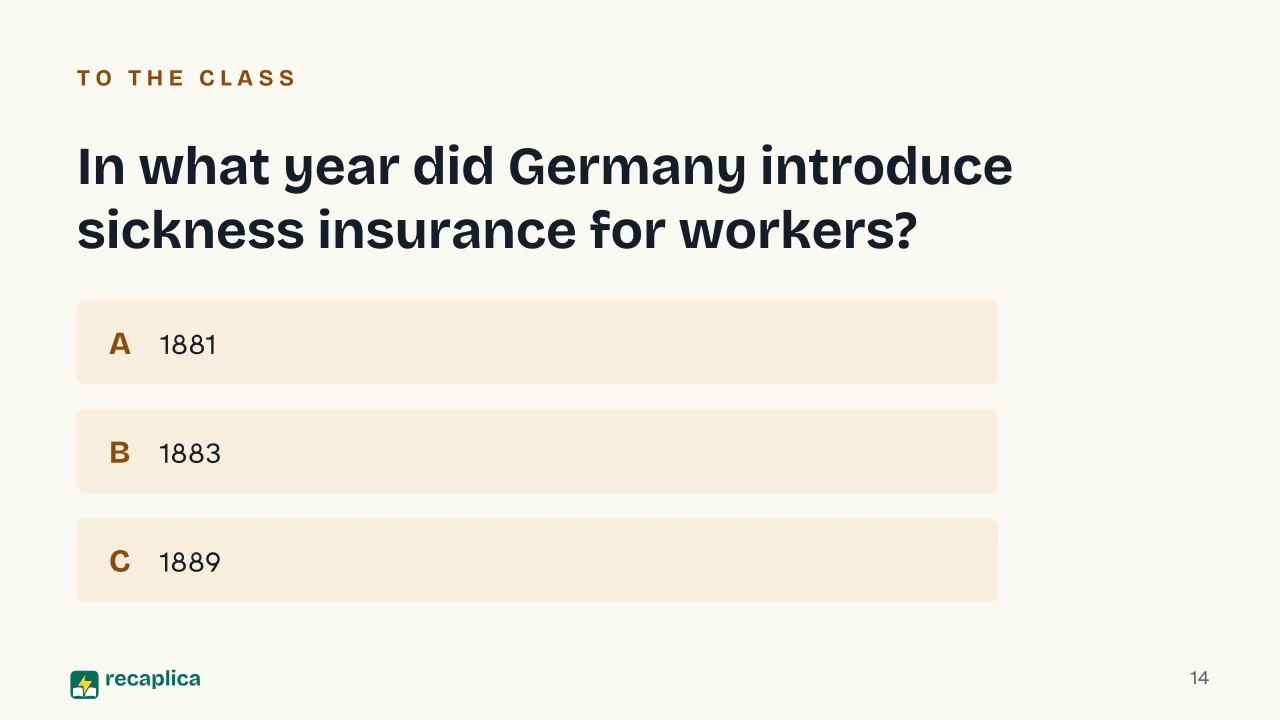  Common myths
Mind mapDrag the background to move around and the nodes to reposition them; use − and + to collapse and expand branches. 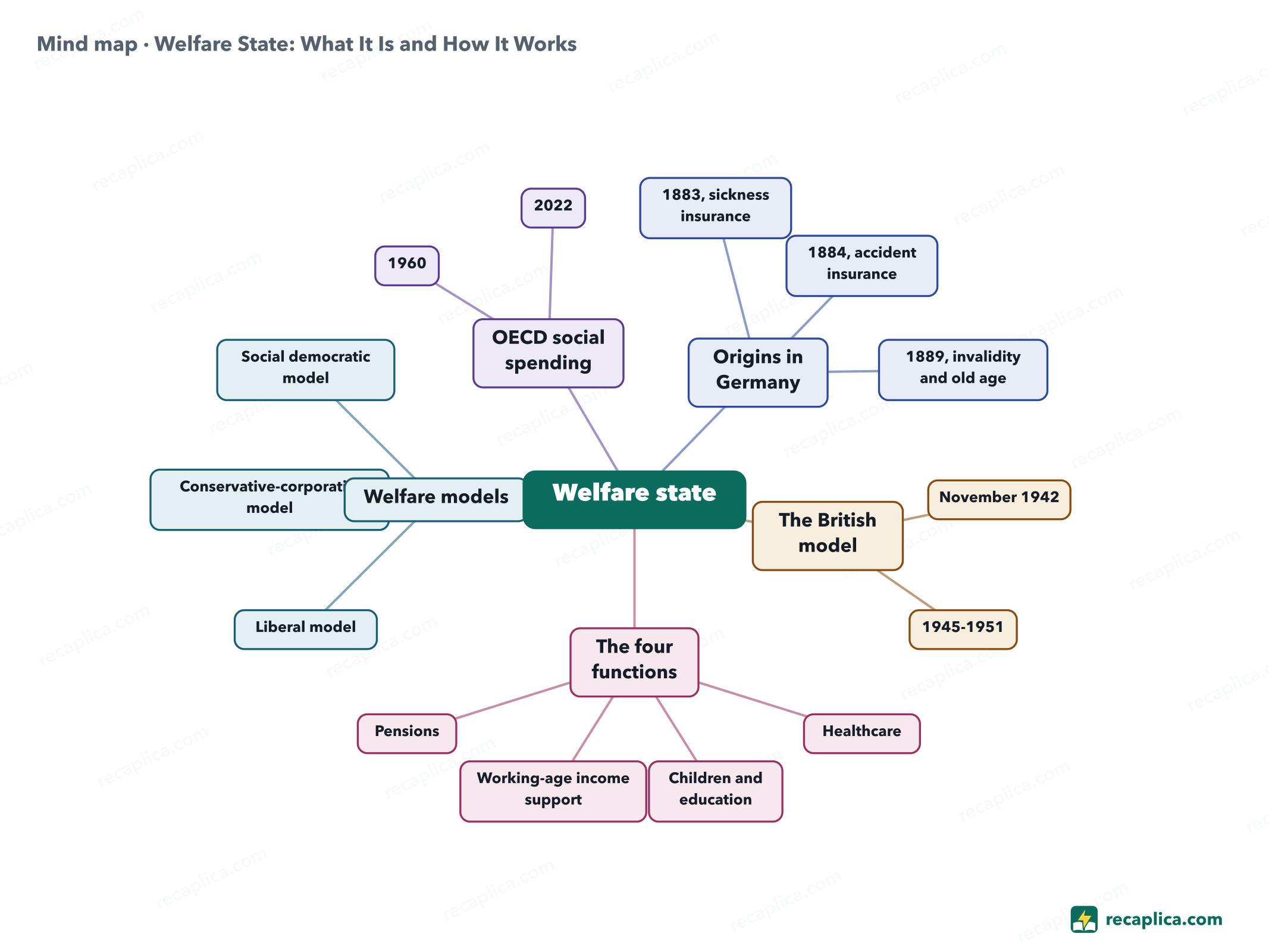
Quiz: test yourselfAnswer the questions to check what you have learned: you get instant feedback and a short explanation. Grade 0/10 0/5
FlashcardsTap the card to flip it and check whether you remember the answer, then move to the next one. 1 / 8 Explain it in your own wordsThe ultimate test: if you can explain it in simple words, you've truly understood it. Write your explanation, then compare it with the Recap. Your explanation is saved only on this device.
Frequently asked questionsWhat does 'welfare state' mean?A welfare state is the set of public policies through which a government provides social protection to citizens: healthcare, support for children and education, income security for people of working age, and pensions for old age. When and where did the welfare state begin?The first social insurance laws appeared in Germany in the 1880s, with sickness insurance (1883), accident insurance (1884) and invalidity and old-age insurance (1889), all pushed through by Otto von Bismarck. In the United Kingdom, the model expanded after the Beveridge Report, presented to parliament in November 1942. What's the difference between a welfare state and workplace benefits?Workplace benefits are the perks a company offers its own staff, like meal vouchers or supplemental insurance. A welfare state is the public system of social protection run by a government: a different subject, even though the names sound alike. Is there a summary or concept map of the welfare state?Yes: the Recap at the top of the page and the Key Points summarize the origins and the four functions; further down, the Map section offers a visual outline covering origins, functions, models and social spending. Which OECD countries spend the most on welfare?According to the OECD, in 2022 France and Italy had the highest public social spending among OECD countries, above 30% of GDP; Costa Rica, Ireland, Korea, Mexico and Türkiye remained under 15%. Every Recap goes through an independent review before publication. |