Skip to content
recaplica

    One moment: security check

    Cloudflare wants to make sure you're not a robot. Tick the box below and your search will continue on its own.

    IT
    recaplica Central Bank: What It Does, How It Sets Rates, and How Money Gets Made
    © 2026 Recaplica · recaplica.com — All rights reserved
    Home › Economics

    Central Bank: What It Does, How It Sets Rates, and How Money Gets Made

    By Recaplica Newsroom · Updated on September 25, 2026

    What to print

    Page numbers appear when printing with default margins.

    Slides

    Choose a cut

    Flash10 slidesThe essential thread, to present in classFull15 slidesEvery chapter and the deeper detail

    Both come with speaker notes.

    Telegram channel
    recaplica Clear in 30 seconds, yours in 10 minutes.
    In 30 seconds Key points Figures Deep dive Slides Myths Mind map Quiz Flashcards FAQ

    In 30 seconds quick read

    A central bank issues legal tender and sets monetary policy, meaning the conditions under which money circulates in the economy; commercial banks take in savings and grant credit, and in doing so create the bank money people use every day to pay for things. In Italy, banking activity has been defined by the 1993 Consolidated Banking Act, and in the euro area only the European Central Bank issues legal tender. Since July 2021 the ECB has aimed for 2% inflation over the medium term, a symmetric target that guides its decisions on interest rates.

    Key Points

    • Commercial banks exist to take in savings and grant credit: that joint definition comes from Italy's 1993 Consolidated Banking Act.
    • Only a central bank can issue legal tender; for the euro, that's the European Central Bank.
    • Bank money (checks, transfers, cards) is convertible on request, at full value, into legal tender, and is issued by supervised operators.
    • Monetary policy is the central bank's set of decisions about the cost and availability of money, usually carried out through reference interest rates.
    • Since July 2021 the ECB has targeted 2% inflation over the medium term, a symmetric goal.
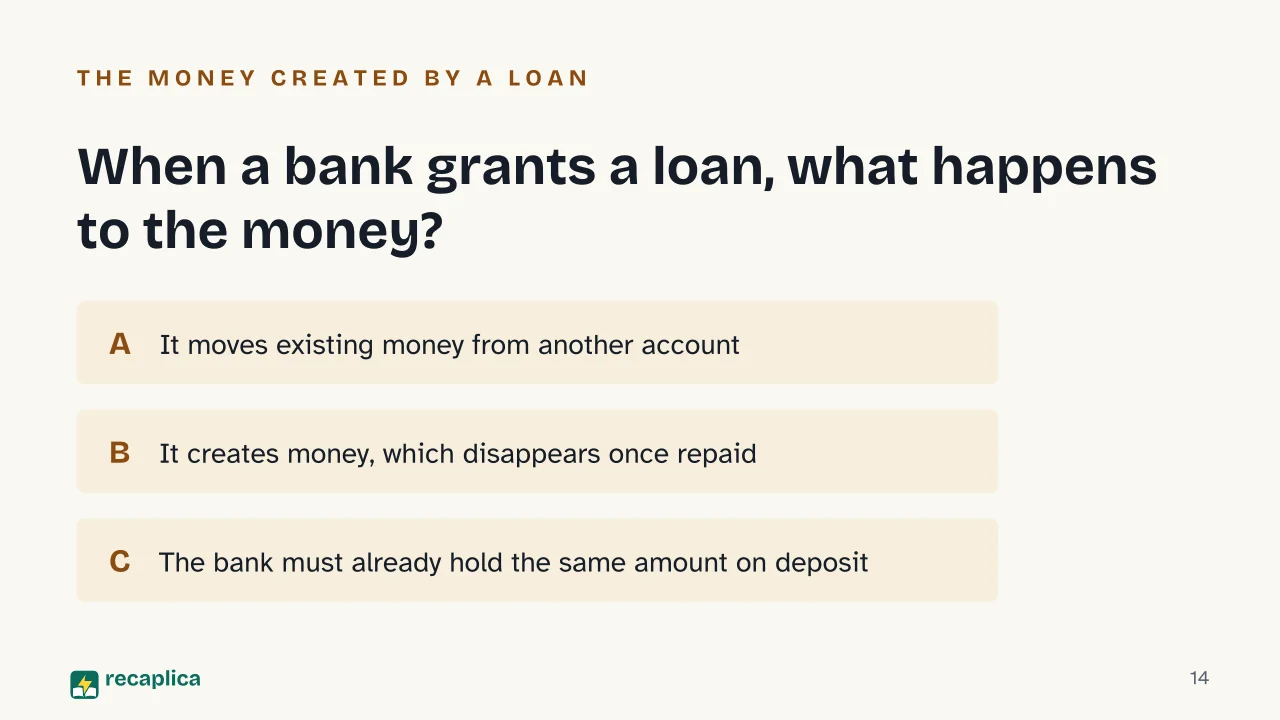
    • When a commercial bank grants a loan, it creates money, which disappears once the loan is repaid.

    Key figures

    • 1993 Year of Italy's Consolidated Banking Act (Legislative Decree No. 385), which defines banking activity as taking in savings from the public and granting credit. Source: Bank of Italy
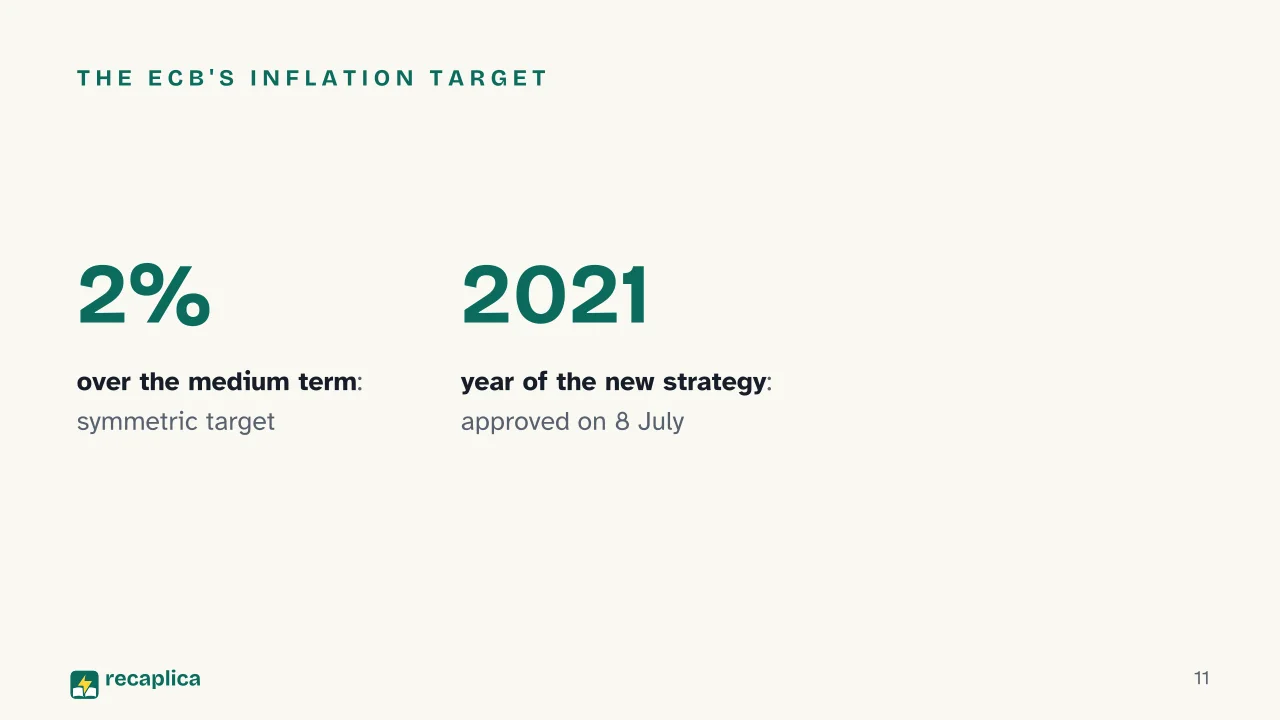
    • 2% The ECB's medium-term inflation target, stated in symmetric form, adopted under the new strategy approved on 8 July 2021. Source: European Central Bank

    Deep Dive

    Whoever sets the cost of a mortgage or a loan isn’t the bank teller behind the counter, it’s a decision made further upstream, at the central bank. The monetary system rests on two different players that constantly interact: commercial banks, the ones an account holder deals with every day, and the central bank, which sits a level above and shapes the conditions they operate under. It’s a topic that belongs to microeconomics and macroeconomics: it involves choices made by individual banks, but with effects across the whole economy.

    Commercial banks, between savings and credit

    In Italy, the Consolidated Banking Act of 1993 defines banking activity as the joint exercise of two functions: taking in savings from the public and granting credit. Neither works without the other: a bank that only took in deposits without lending them out, or that only lent without a source of funds, wouldn’t be doing banking in the proper sense.

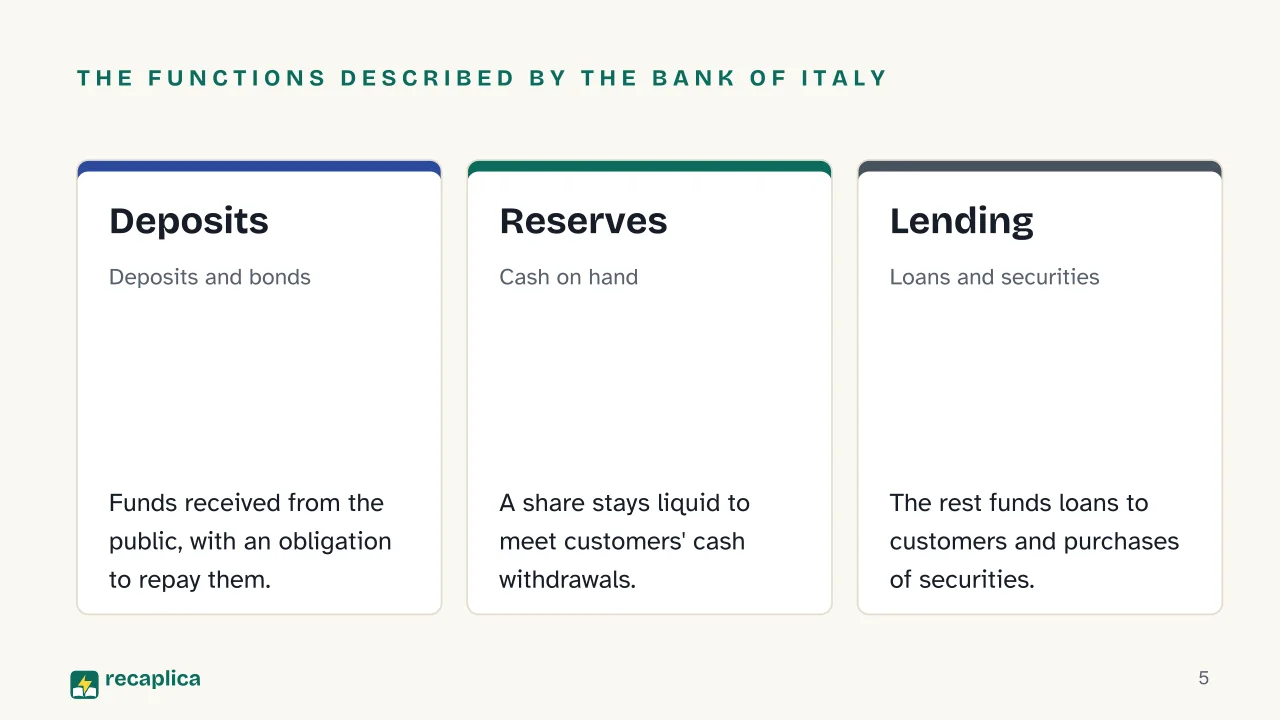
    To raise funds, banks don’t rely on deposits alone: they also issue bonds, promises to repay the sums received on a set date and with a given return. Of these funds, part stays in reserve to meet customers’ cash withdrawals; the rest funds loans and purchases of securities. Banks also exchange liquidity with each other, on the interbank market, when one needs to cover a cash shortfall and another has funds to spare.

    Legal tender and bank money

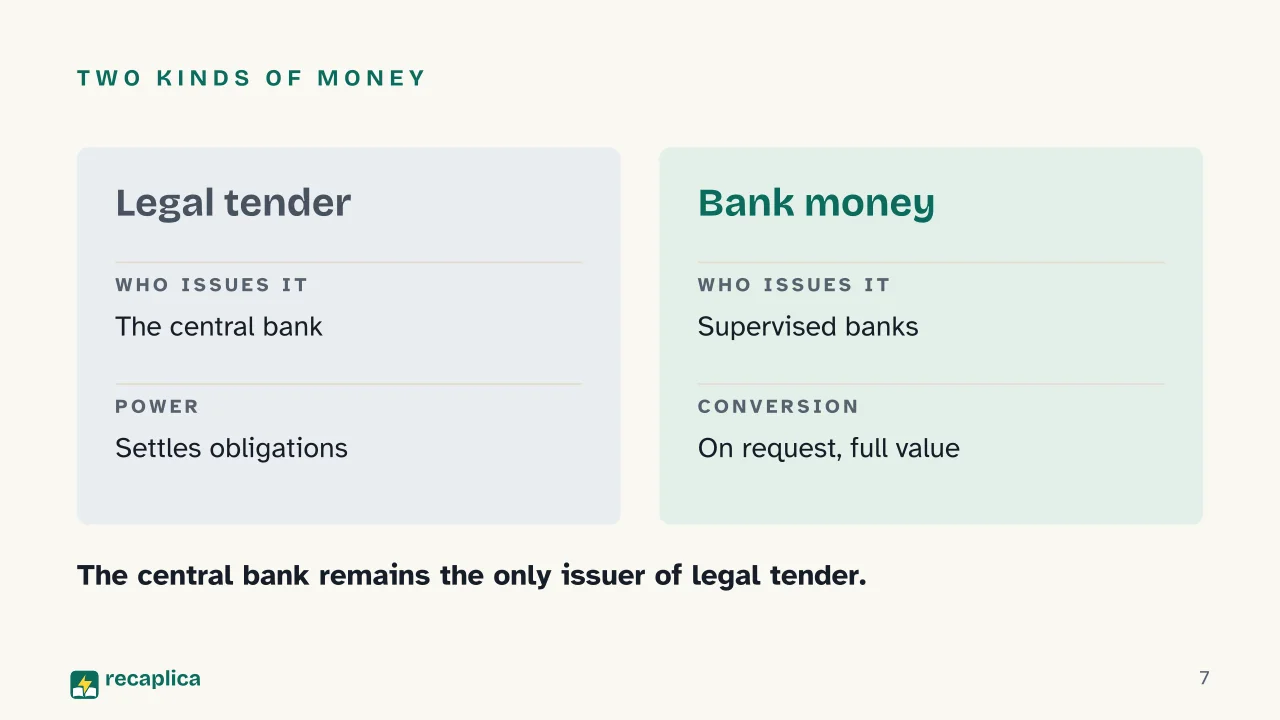
    Not all money is created the same way. Legal tender, the kind that settles monetary obligations by law, is issued only by a central bank: for the euro, the European Central Bank. Its creation follows strict procedures, designed to keep its value stable over time.

    Legal tenderBank money
    Who issues itThe central bankBanks and other supervised operators
    What it includesBanknotes and coins with legal tender statusChecks, transfers, direct debits, cards, e-money
    ConvertibilityIt is the reference valueConvertible on request, at full value, into legal tender

    Most everyday payments, from card swipes to bank transfers, run on bank money, not physical banknotes: according to the ECB, this form of money makes up the part of the money supply people actually use most in daily life, even though it coexists with legal tender. In Italy, the authority that keeps an eye on this balance is the Bank of Italy, which supervises the operators authorized to issue bank money.

    What a central bank does

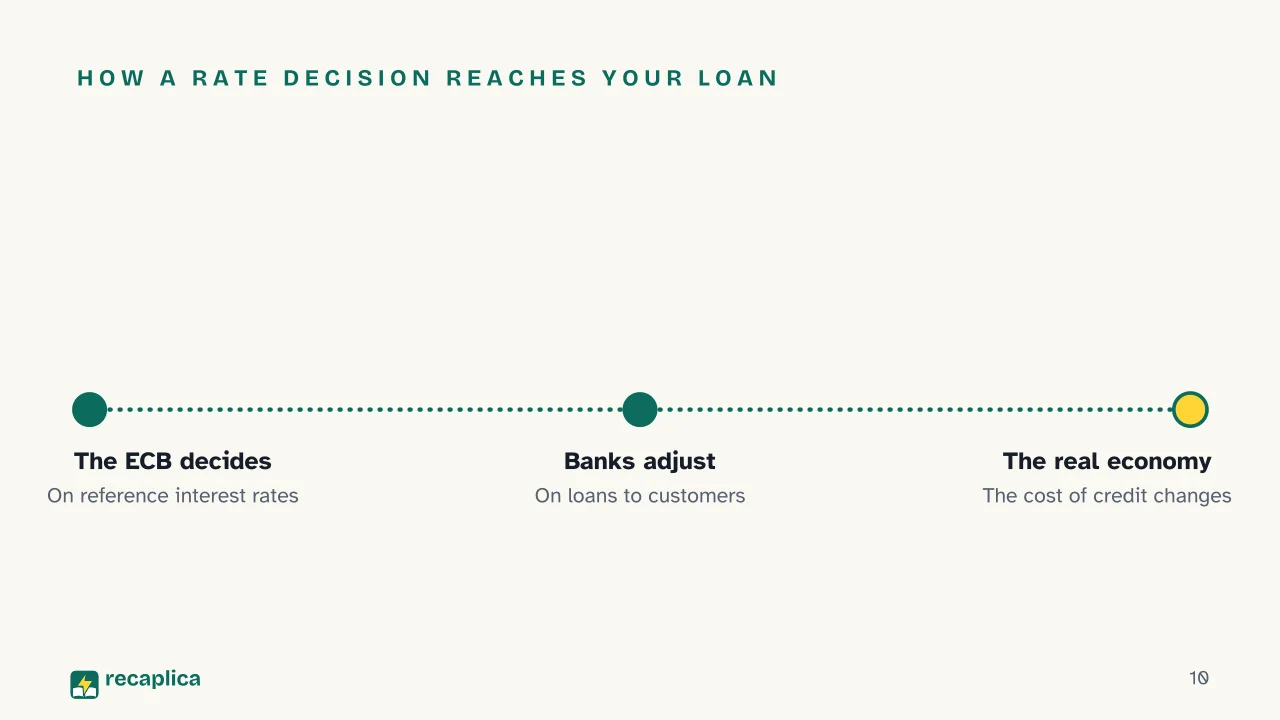
    Monetary policy, the Bank of Italy explains, covers the decisions a central bank makes to influence the cost and availability of money in the economy. In the euro area, the most closely watched decision is usually the one on reference interest rates: when the ECB changes them, the decision in turn affects the rates commercial banks charge their customers on loans. The Bank of Italy takes part in these decisions through its Governor, who sits on the ECB’s Governing Council.

    In periods when inflation stays low for a long stretch and rates are already low, the central bank can also turn to less conventional tools, such as asset purchase programs, to keep influencing credit conditions once the interest-rate lever has already given what it could.

    The 2% target, since 2021

    On 8 July 2021 the ECB’s Governing Council approved a new monetary policy strategy: the goal is to keep inflation at 2% over the medium term, in symmetric form, meaning deviations above and below target are treated as equally undesirable. Before that date, the target was worded differently; symmetry is a feature of the strategy adopted in 2021, not a rule that always existed. This goal, the Bank of Italy explains, also helps support the European Union’s broader economic policies aimed at full employment and growth.

    How money is created when a bank grants a loan

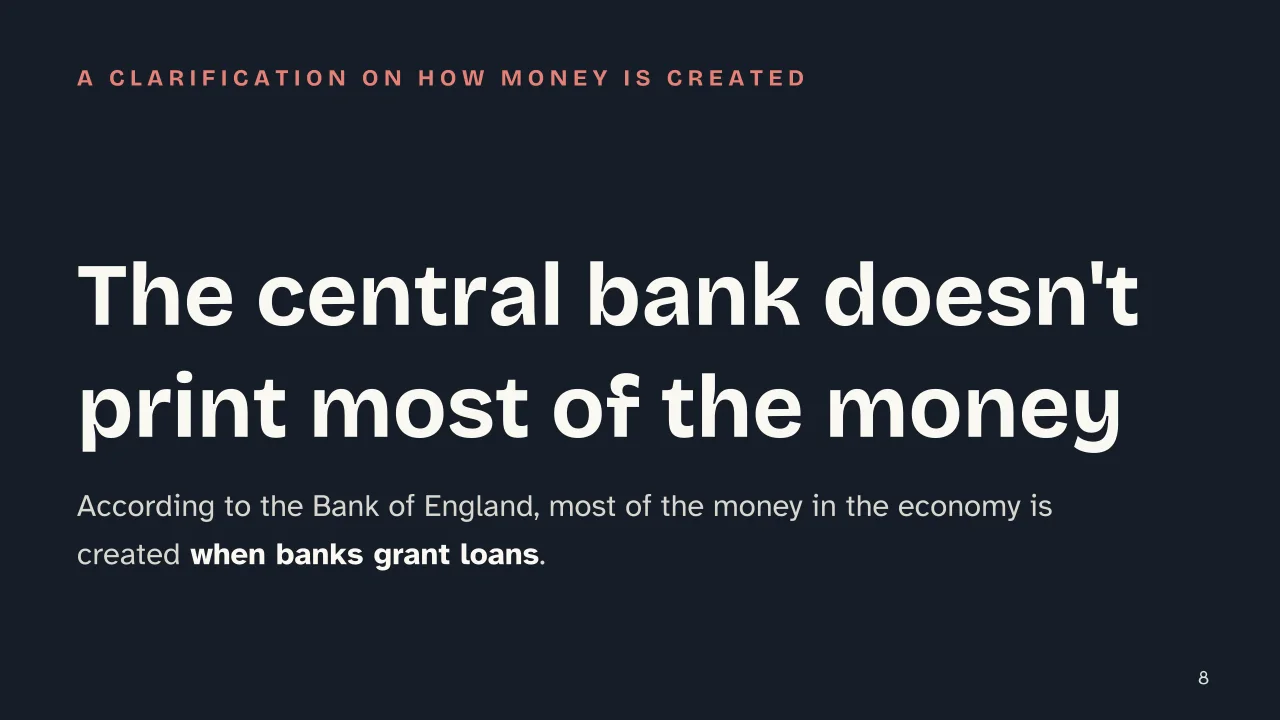
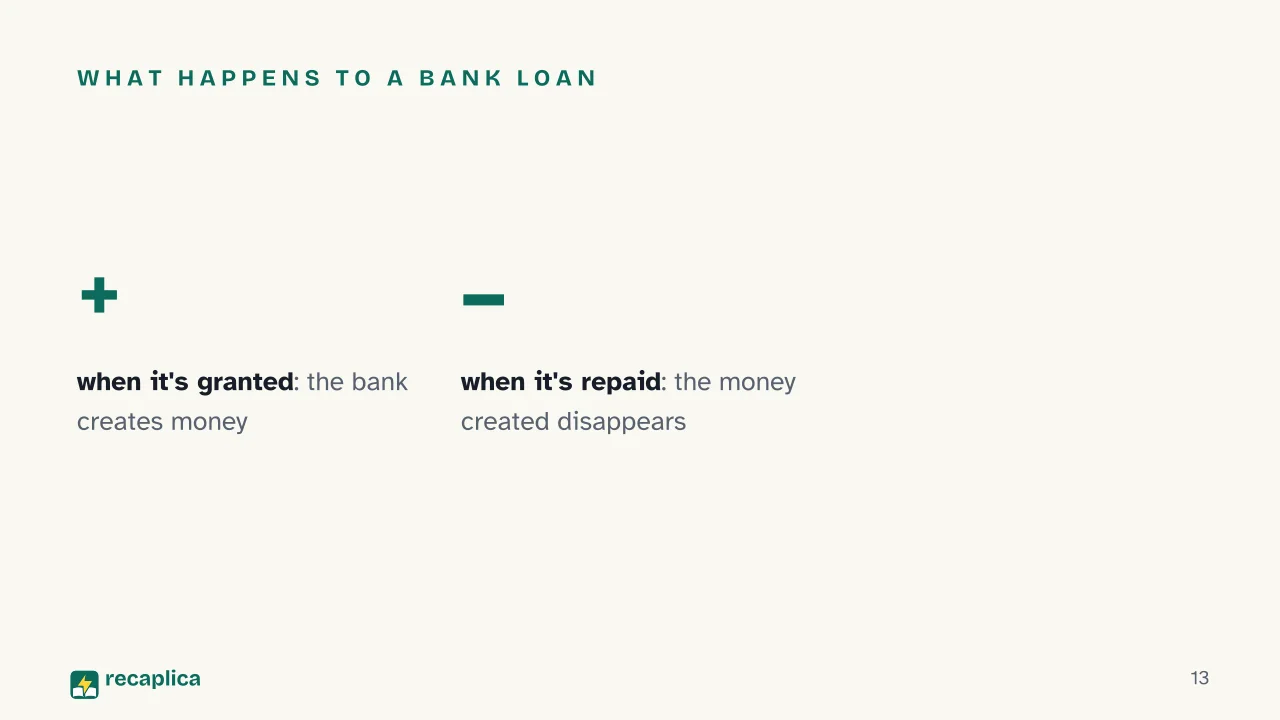
    Here comes the part that surprises most newcomers to the topic. According to the ECB’s explainer, when a commercial bank grants a loan, say, to buy a car, it creates money at that moment; when the loan is repaid, the money created disappears. The commercial bank creates that money the moment it grants the loan. The central bank remains the only source of legal tender, but much of the bank money used every day comes from credit granted by commercial banks in exactly this way.

    Practical example: a family asks their bank for a mortgage to buy a home. The moment the bank approves the loan, it credits the amount to the family’s account: that sum is newly created money, not money withdrawn from someone else’s deposit. As the family repays the installments, that money is gradually cancelled out.

    The same distinction between legal tender and bank money also underpins more recent innovations, such as the digital euro, designed precisely as a form of central bank money accessible directly to the public. This mechanism isn’t unchecked: according to the Bank of England, regulation limits how much money banks can create, and banks must hold their own capital resources against the risk of borrowers defaulting, constraints that have tightened since the financial crisis.

    Slide deck

    Slides ready to download and make your own in PowerPoint or Google Slides, with speaker notes. Pick the Flash cut or the Full one.
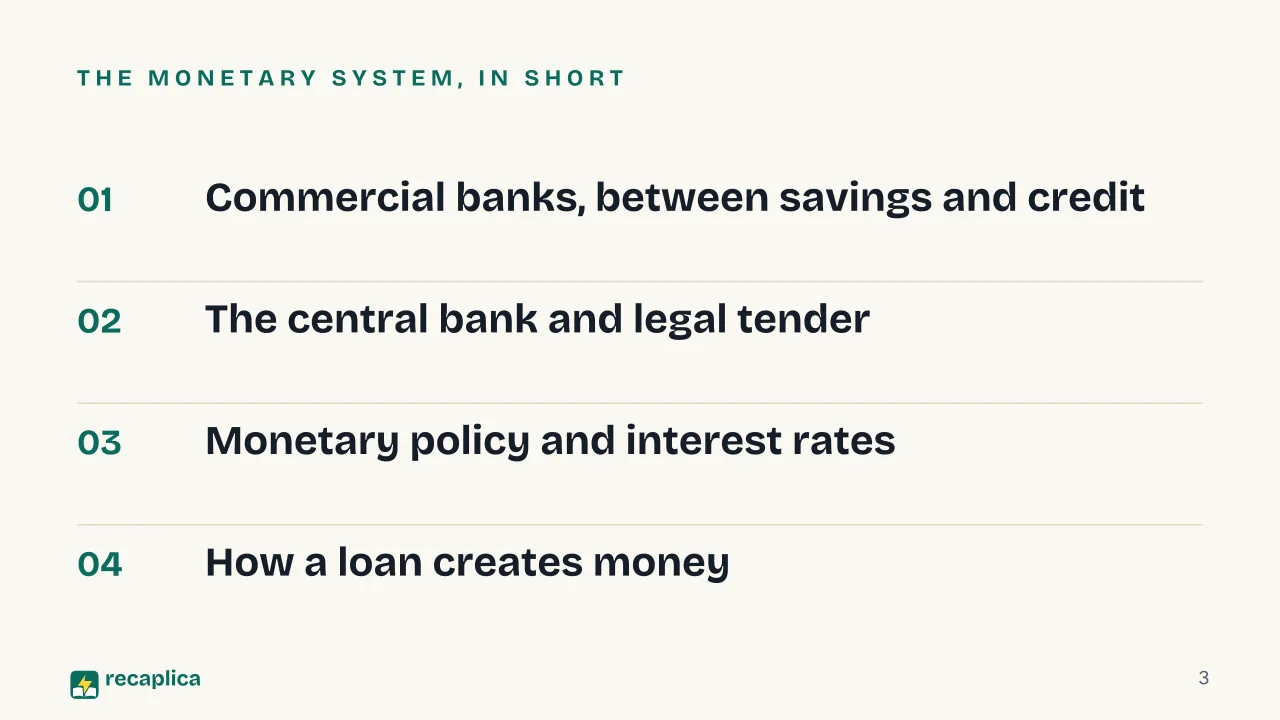
    Slide 1 of the presentation on Central Bank: Central BankSlide 2 of the presentation on Central Bank: Who decides how much money costs?Slide 3 of the presentation on Central Bank: The monetary system, in shortSlide 4 of the presentation on Central Bank: Chapter 01: Commercial banksSlide 5 of the presentation on Central Bank: The functions described by the Bank of Italy: Deposits, Reserves, LendingSlide 6 of the presentation on Central Bank: Chapter 02: The central bankSlide 7 of the presentation on Central Bank: Two kinds of moneySlide 8 of the presentation on Central Bank: The central bank doesn't print most of the moneySlide 9 of the presentation on Central Bank: Chapter 03: Monetary policySlide 10 of the presentation on Central Bank: How a rate decision reaches your loanSlide 11 of the presentation on Central Bank: The ECB's inflation targetSlide 12 of the presentation on Central Bank: Chapter 04: How money is madeSlide 13 of the presentation on Central Bank: What happens to a bank loanSlide 14 of the presentation on Central Bank: When a bank grants a loan, what happens to the money?Slide 15 of the presentation on Central Bank: Keep exploring
    Flash10 slidesThe essential thread, to present in classFull15 slidesEvery chapter and the deeper detail

    Common myths

    • ✗ Myth The central bank physically prints most of the money in circulation.

      ✓ Reality According to the Bank of England, most of the money in the economy is created not by printing presses at the central bank but by commercial banks when they grant loans; that money disappears once the loan is repaid, the ECB explains.

    • ✗ Myth A bank transfer or a card payment is the same thing as money issued by the central bank.

      ✓ Reality According to the Bank of Italy, bank money (checks, transfers, cards, e-money) is convertible on request, at full value, into legal tender, but it is still issued by supervised operators: the central bank remains the only issuer of legal tender.

    • ✗ Myth A central bank's decisions on interest rates stay confined to the banking world.

      ✓ Reality According to the Bank of Italy, a change in reference interest rates in turn affects the rates commercial banks charge customers on loans: it passes through into the real economy via the banking system.

    Mind map

    Drag the background to move around and the nodes to reposition them; use − and + to collapse and expand branches.
    Customize
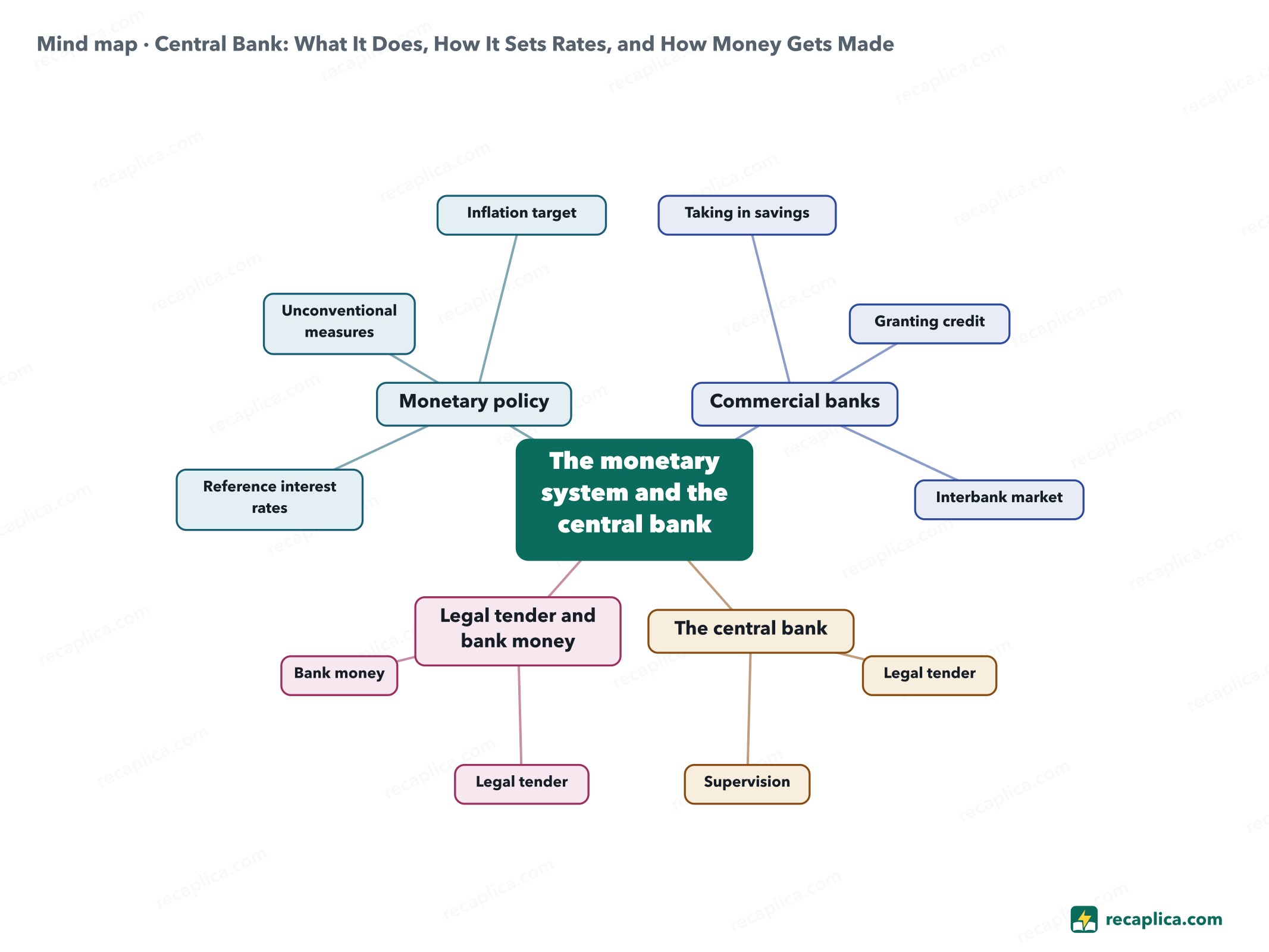
    Mind map: Central Bank: What It Does, How It Sets Rates, and How Money Gets Made
    • The monetary system and the central bank
      • Commercial banks Take in savings and grant credit
        • Taking in savings Deposits and bonds
        • Granting credit Loans and buying securities
        • Interbank market Banks lend to each other
      • The central bank Issues legal tender and supervises the system
        • Legal tender For the euro, issued by the ECB
        • Supervision In Italy, the Bank of Italy
      • Legal tender and bank money
        • Legal tender Settles monetary obligations
        • Bank money Convertible into legal tender on request
      • Monetary policy Decisions on the cost and availability of money
        • Reference interest rates The ECB's most closely watched decision
        • Unconventional measures Asset purchase programs
        • Inflation target 2% over the medium term, since 2021

    Quiz: test yourself

    Answer the questions to check what you have learned: you get instant feedback and a short explanation.

    Grade 0/10 0/5
    1 According to Italy's 1993 Consolidated Banking Act, what does a commercial bank do?

    The Consolidated Banking Act (Legislative Decree 385/1993) defines banking activity as the joint exercise of taking in savings from the public and granting credit.

    2 Who can issue legal tender for the euro?

    According to the Bank of Italy, the only money with the power to settle monetary obligations is legal tender, issued by a central bank: for the euro, that's the ECB.

    3 Can bank money, such as a wire transfer, be converted into legal tender?

    According to the Bank of Italy, whoever holds bank money can request its conversion at any time, without any loss of value, into money with legal tender status.

    4 According to the Bank of Italy, what is the ECB's usually most important monetary policy decision in the euro area?

    The Bank of Italy's glossary entry names the decision on reference interest rates as the ECB's usually most important monetary policy choice.

    5 According to the ECB, what happens to money when a commercial bank grants a loan?

    According to the ECB's explainer, when a commercial bank grants a loan to buy a car, it creates money at that moment, and when the loan is repaid, the money created disappears.

    Answers: 1-A · 2-B · 3-A · 4-B · 5-B

    Flashcards

    Tap the card to flip it and check whether you remember the answer, then move to the next one.

    1 / 7

    Explain it in your own words

    The ultimate test: if you can explain it in simple words, you've truly understood it. Write your explanation, then compare it with the Recap.

    Your explanation is saved only on this device.

    A central bank issues legal tender and sets monetary policy, meaning the conditions under which money circulates in the economy; commercial banks take in savings and grant credit, and in doing so create the bank money people use every day to pay for things. In Italy, banking activity has been defined by the 1993 Consolidated Banking Act, and in the euro area only the European Central Bank issues legal tender. Since July 2021 the ECB has aimed for 2% inflation over the medium term, a symmetric target that guides its decisions on interest rates.

    Frequently asked questions

    What's the difference between legal tender and bank money?

    Legal tender is issued by the central bank, for the euro by the ECB, and is the only money that can settle monetary obligations. Bank money, checks, transfers, cards, is issued by banks and is convertible on request into legal tender, the Bank of Italy explains.

    What is a central bank's monetary policy for?

    To influence the cost and availability of money in the economy, typically through reference interest rates, which then feed through into the rates commercial banks charge customers on loans, according to the Bank of Italy.

    How does a bank create money?

    By granting a loan: according to the ECB, at that moment the bank creates money, which disappears once the loan is repaid.

    What is the ECB's inflation target?

    Since 8 July 2021 the ECB has targeted 2% inflation over the medium term, in symmetric form: deviations above or below that level are considered equally undesirable.

    Who supervises Italian banks?

    The Bank of Italy, which oversees authorized operators in the banking and financial system that issue bank money and provide payment services.

    Sources

    • Bank of Italy — Economics for everyone, "What is a bank?"
    • Bank of Italy — Economics for everyone, "Legal tender and bank money"
    • Bank of Italy — Glossary, "Monetary policy"
    • European Central Bank — Press release on the new monetary policy strategy
    • European Central Bank — Explainer, "What is money?"
    • Bank of England — Explainer, "How is money created?"

    Every Recap goes through an independent review before publication.

    Every evening, the day's new Recaps on our Telegram channel. Join the channel →

    Keep learning

    • Economics Biggest Economies in the World: The Ranking by GDP, Explained In 2024, according to World Bank data, the United States remains the country with the highest nominal GDP in the world, ahead of China. Measured instead at purchasing power parity (PPP), which accounts for differences in price levels between countries, the ranking flips and China moves into first place. Nominal GDP reflects the weight of an economy on international markets in current dollars; PPP GDP reflects the domestic purchasing power of a country's residents. The two measures tell different stories, which is why the same economy can rank differently depending on which one you check. Read the Recap →
    • Economics Welfare State: What It Is and How It Works A welfare state is the set of public policies through which a state provides social protection to its citizens across the different stages of life, from healthcare to old age. It began in Germany in the 1880s, when Chancellor Otto von Bismarck pushed through three laws insuring workers against sickness, workplace accidents, and invalidity and old age. In the United Kingdom, the Beveridge Report, presented to parliament in November 1942, laid the groundwork for a more universal model, extended to the whole population. The International Labour Organization frames welfare policy around four functions: healthcare, support for children and education, income security for working-age adults, and pensions. Public social spending has grown sharply across OECD countries, from under 10% of GDP in 1960 to over 30% in France and Italy in 2022. Read the Recap →
    • Economics Poverty: Definition and How It Differs from Inequality and Underdevelopment Poverty is the condition of lacking the minimum resources needed to live, and it can be measured in more than one way depending on the yardstick used. Absolute poverty is set against a fixed threshold, such as the basket of essential goods ISTAT uses in Italy or the World Bank's international line of $3 a day, while relative poverty compares a household's spending with the average in its own country. It is a distinct phenomenon from economic inequality, which Eurostat measures with the Gini index on the distribution of income, and from underdevelopment, which the United Nations Development Programme assesses with the Human Development Index by looking beyond economic growth alone. According to the World Bank, 831 million people worldwide were living in extreme poverty in 2025. Read the Recap →

    recaplica

    Clear in 30 seconds, yours in 10 minutes.

    Recaps Mind maps Request a Recap Telegram channel Mind map maker Our method About Privacy & cookies Legal notes & terms of use

    © 2026 Recaplica · A project by Curi S.r.l. — VAT IT05472000750

    Statistics, only if you say so

    To learn which Recaps help most we would use Google Analytics, with aggregate, anonymous data. It starts only with your OK, and you can change your mind anytime. Privacy policy