recaplica
Clear in 30 seconds, yours in 10 minutes.
In 30 seconds quick read
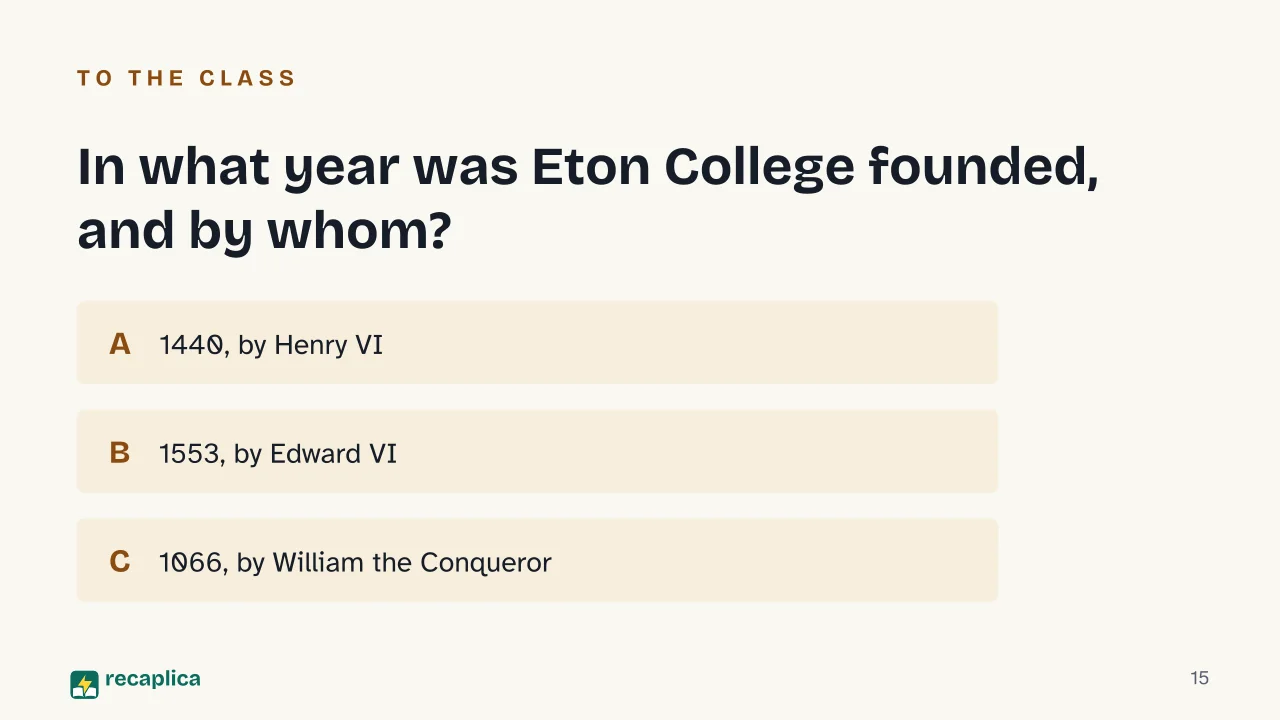
Eton College was founded in 1440 by King Henry VI, who wanted to give free board, lodging and schooling to a group of poor boys, the King's Scholars. Within a few years the foundation changed shape, began taking in fee-paying pupils too, and started a long transformation that, through reforms of its curriculum and admissions, turned it into one of the most prestigious and expensive schools in the United Kingdom. Its fame still rests largely on the prime ministers and public figures who studied there.
Key Points
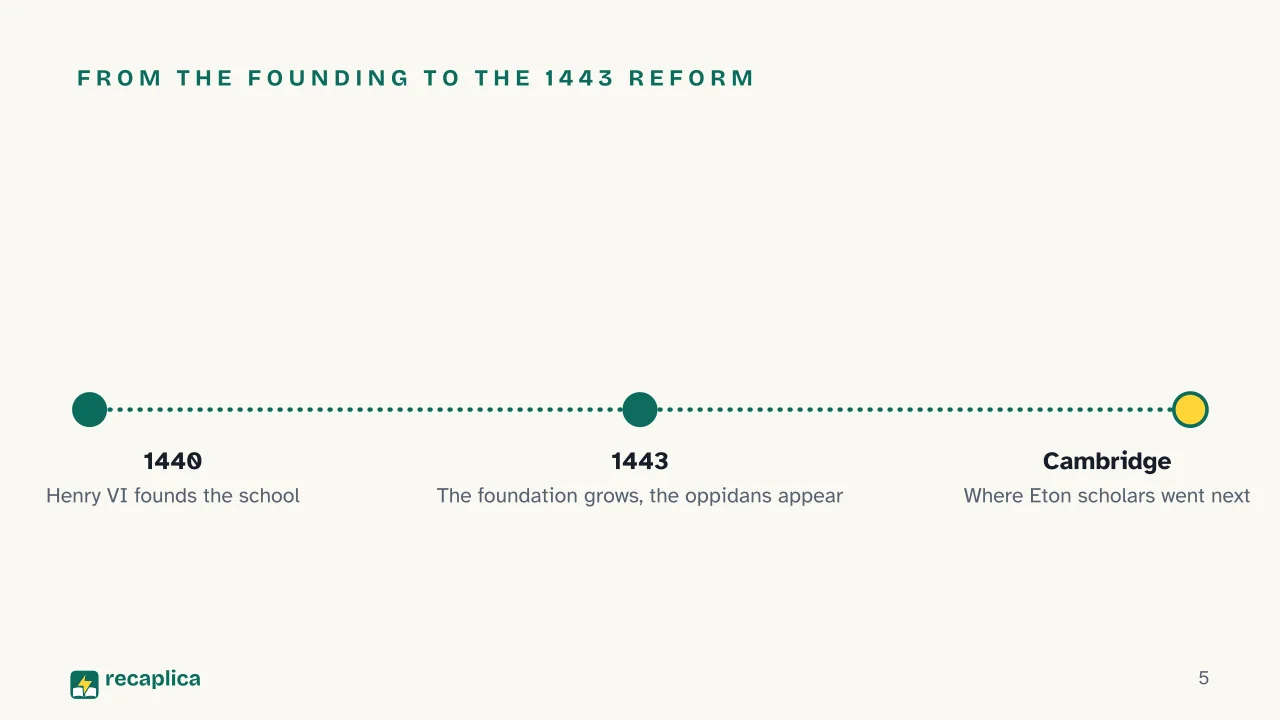
Founded in 1440 by King Henry VI as a charity school for a group of poor boys, the King's Scholars.
In 1443 the foundation grew and the oppidans, fee-paying pupils distinct from the scholars, appeared.
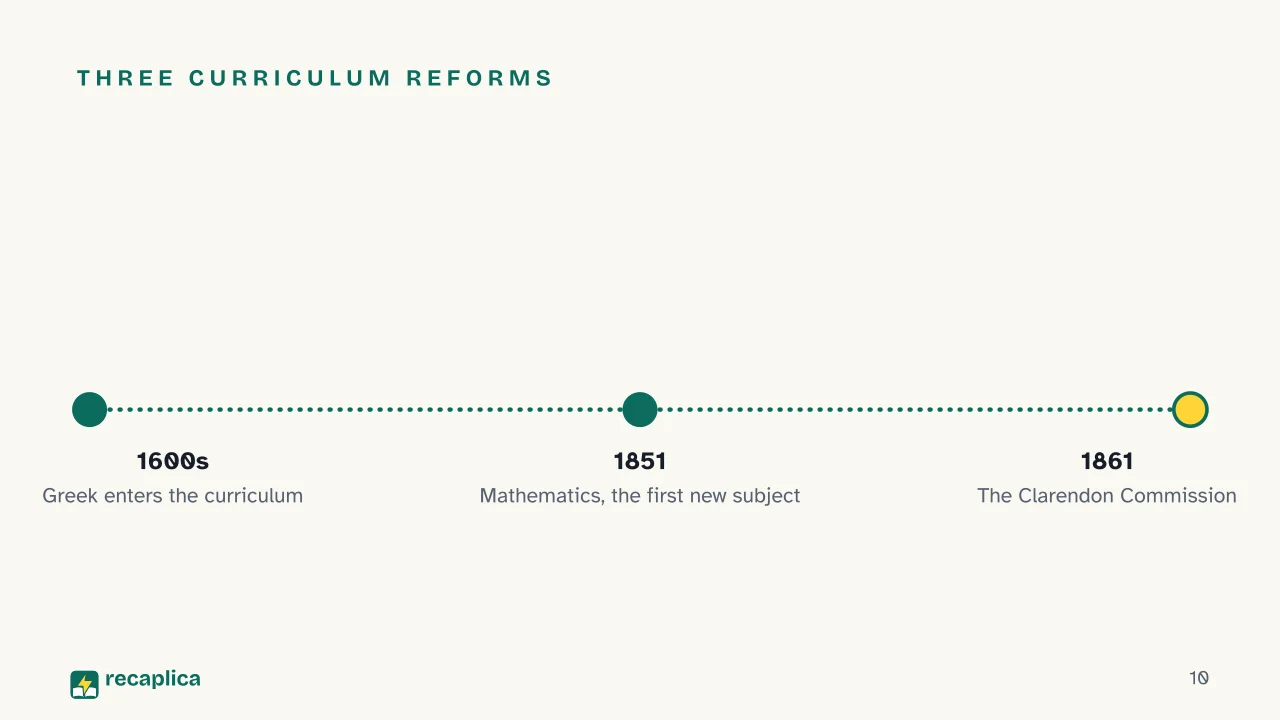
The curriculum widened over the centuries: Greek in the early 1600s, mathematics from 1851.
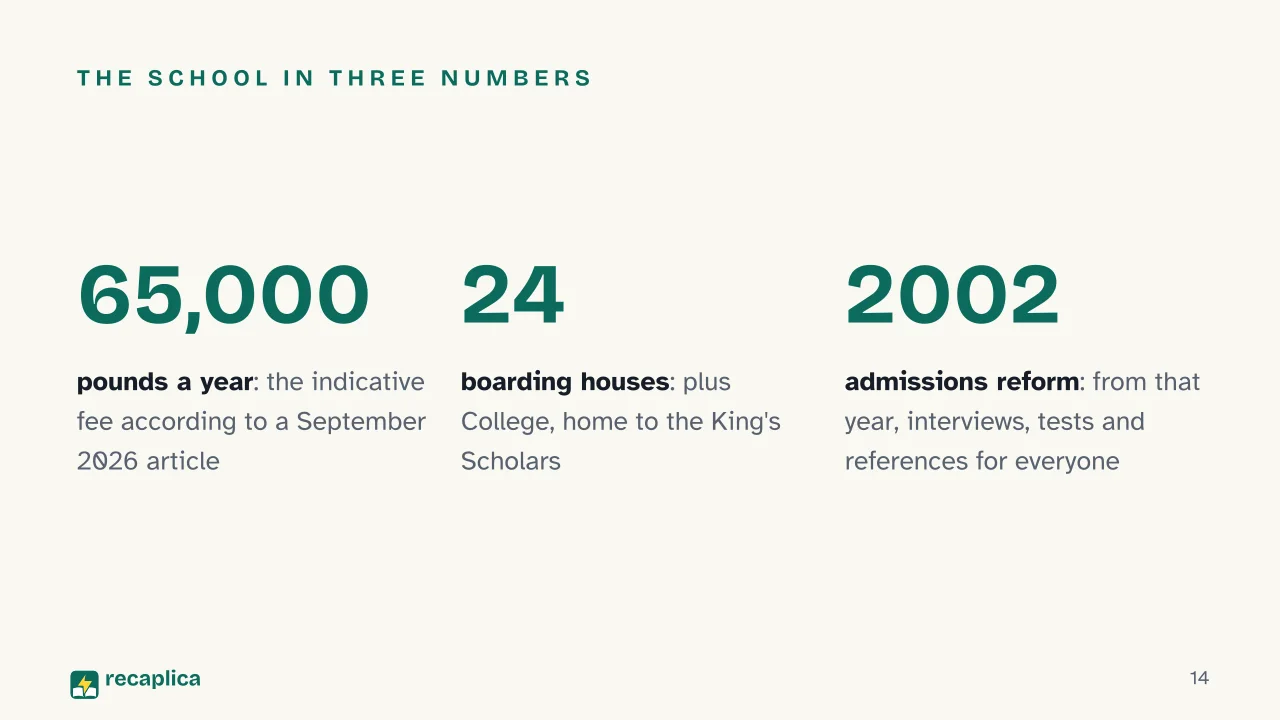
Since 2002 every candidate has had to pass interviews, written tests and references to gain a place.
In 2026 annual fees stood at around 65,000 pounds, among the highest in the United Kingdom.
Alumni cited by the sources include more than one in three British prime ministers, George Orwell and several members of the royal family.
Key figures
1440 The year the school was founded, by order of Henry VI, to provide free education to a group of poor boys. Source: Eton College, Our History
1851 The year mathematics became the first new subject added to a curriculum that had until then centred on the classics. Source: Eton College, Our History
£65,000 Indicative annual tuition in 2026, among the highest in the United Kingdom, according to an article published that September. Source: ABC News, September 2026
Deep Dive
Eton College began in 1440, when King Henry VI decided to found a school with a name far longer than the one we know today: “Kynge’s College of Our Ladye of Eton besyde Windesore”. Its original purpose was not a school for wealthy families, but the opposite: to provide free board, lodging and education to a group of poor boys, the King’s Scholars. Its architectural and institutional model drew on Winchester College and New College, Oxford, both founded by William of Wykeham, and in the same period Henry VI also founded King’s College, Cambridge, where Eton scholars went on to study.
From charity school to a school of two classes of pupils
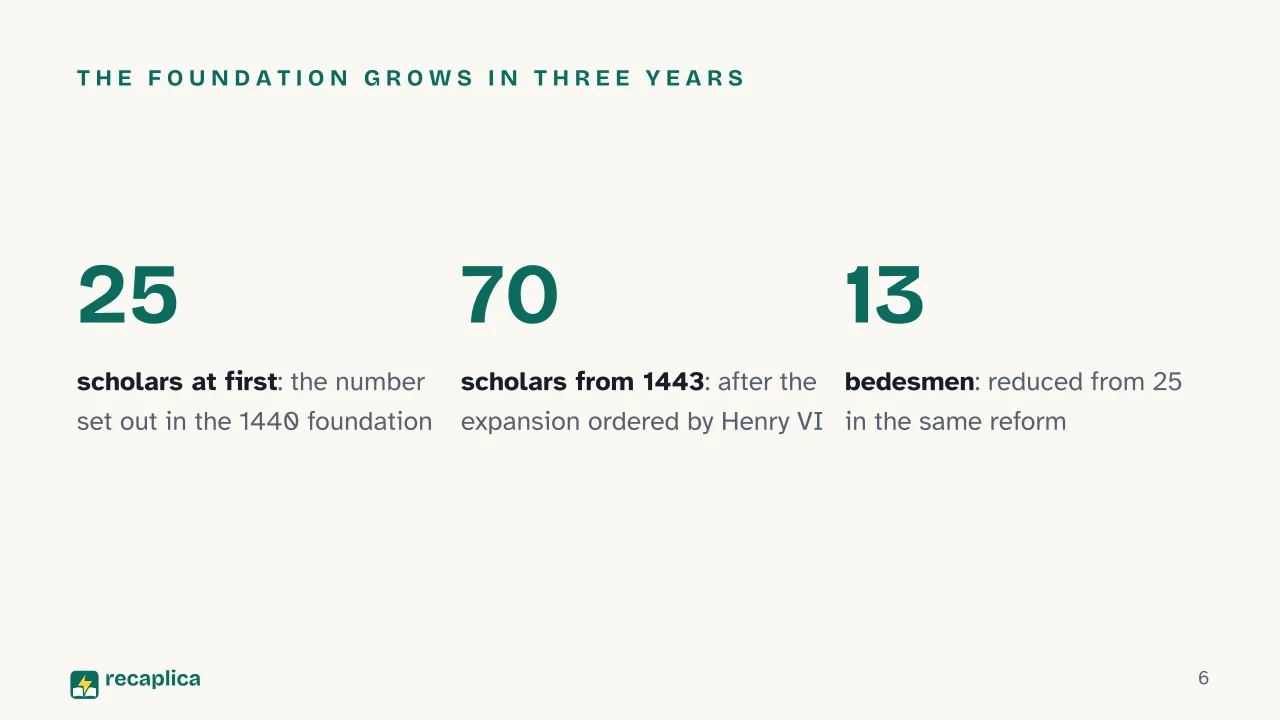
The original plans soon changed. In 1443 Henry VI expanded the foundation: the number of scholars rose to 70, while the bedesmen, the poor men supported by the school, fell from 25 to 13. That same year the oppidans appeared, the commensals or fee-paying pupils distinct from the scholars, who over time became the school’s largest group.
Category
Origin
Role
King’s Scholars
1440 foundation, expanded in 1443
Scholarship boys, educated free of charge, live in College
Oppidans
Established in 1443
Fee-paying pupils, who over time became the largest group
A practical example: the distinction between scholars and oppidans helps explain why Eton was not founded as a school for the wealthy few. For centuries the two categories lived side by side in the same school on different terms: one free and tied to the merit of the original foundation, the other paid for.
The curriculum changes with the centuries
The school did not stay fixed to its medieval design. Greek entered the curriculum in the early 1600s, while it took until 1722 for the first proper boarding house, Jourdelay’s, to be built. Eton’s rise in prestige among British schools is traced, according to Britannica, to the headmastership of Edward Barnard, between 1754 and 1765: an era in which the United Kingdom was also living through the sweeping social and economic changes told in the Recap on the Industrial Revolution, which reshaped the country the school operated in.
A century later, two more turning points arrived: in 1851 mathematics became the first new subject to join the classics, and in 1861 the Clarendon Commission brought significant reforms to how the school was run.
Who got into Eton, and how admissions changed
For most of its history, getting into Eton depended heavily on family connections. During the 20th century the school began weighing academic ability more than belonging to a family with historical ties to it.
A practical example: the 2002 reform helps measure this shift. Before that year, a family’s own history with the school was often enough; from that year on, every candidate, wealthy or scholarship-bound, faced the same path of interviews, written tests and references before winning a place.
The school today: houses, buildings, fees
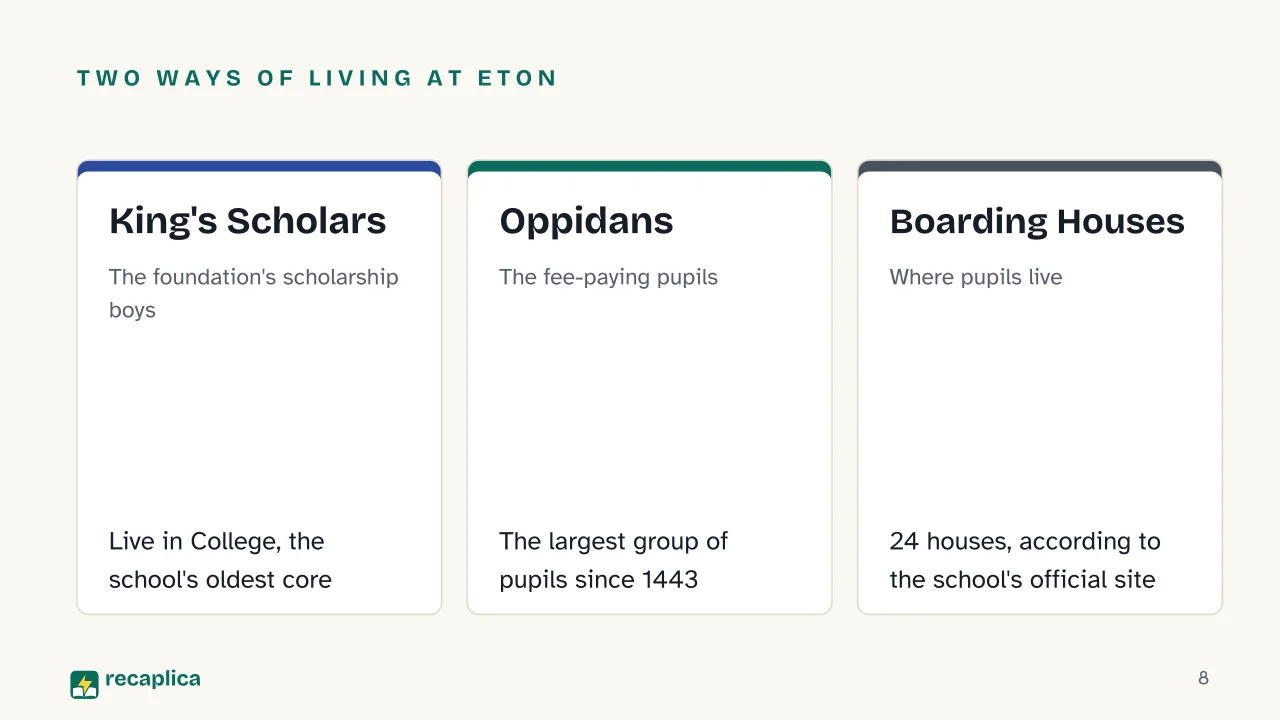
According to the school’s official site, Eton counts 24 boarding houses, plus College, where the King’s Scholars live. The complex, which includes buildings dating to 1441-1446 such as most of School Yard and Green Court, College Hall and the Lower School, is listed Grade I, the highest level of heritage protection in the United Kingdom. In 2026 annual fees stood at around £65,000, according to an article published that September, among the highest in the United Kingdom.
Who studied there
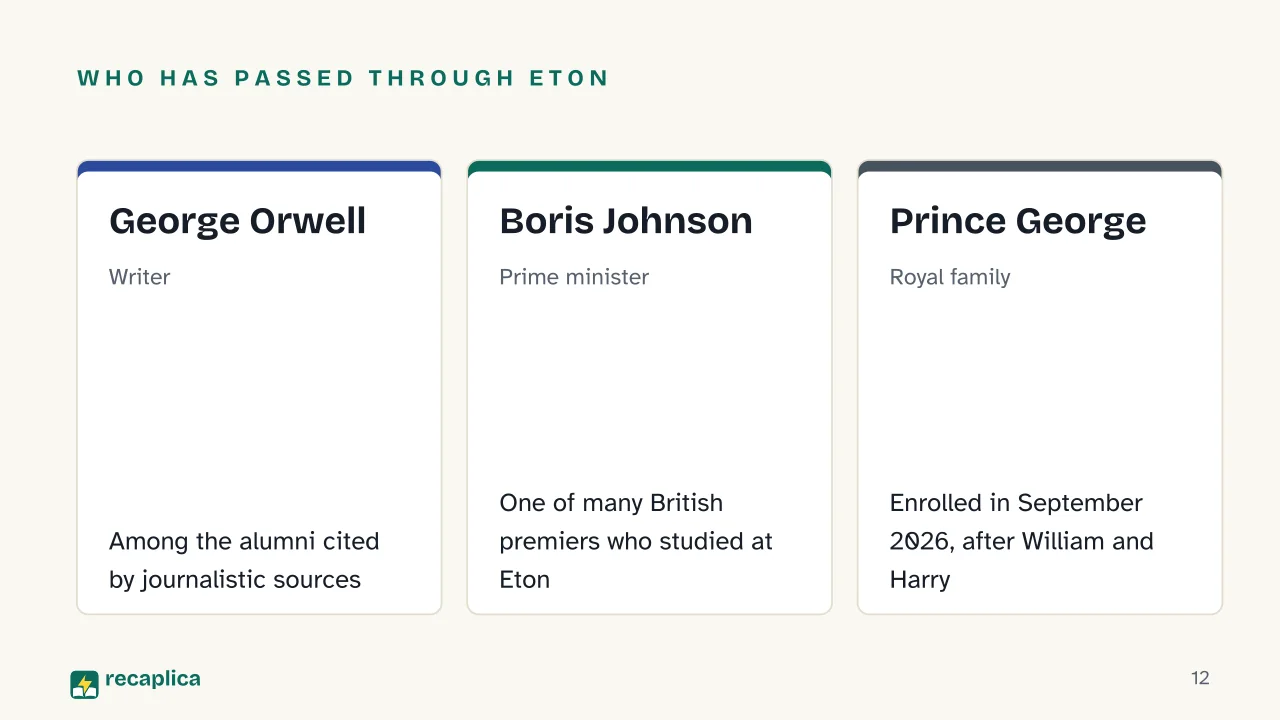
Much of Eton’s fame rests on who studied there. According to the sources, more than one in three British prime ministers attended the school, including Boris Johnson and David Cameron. Other alumni cited include the writer George Orwell, the actor Hugh Laurie and the adventurer Bear Grylls, alongside Princes William and Harry and, from September 2026, Prince George.
Slide deck
Slides ready to download and make your own in PowerPoint or Google Slides, with speaker notes. Pick the Flash cut or the Full one.
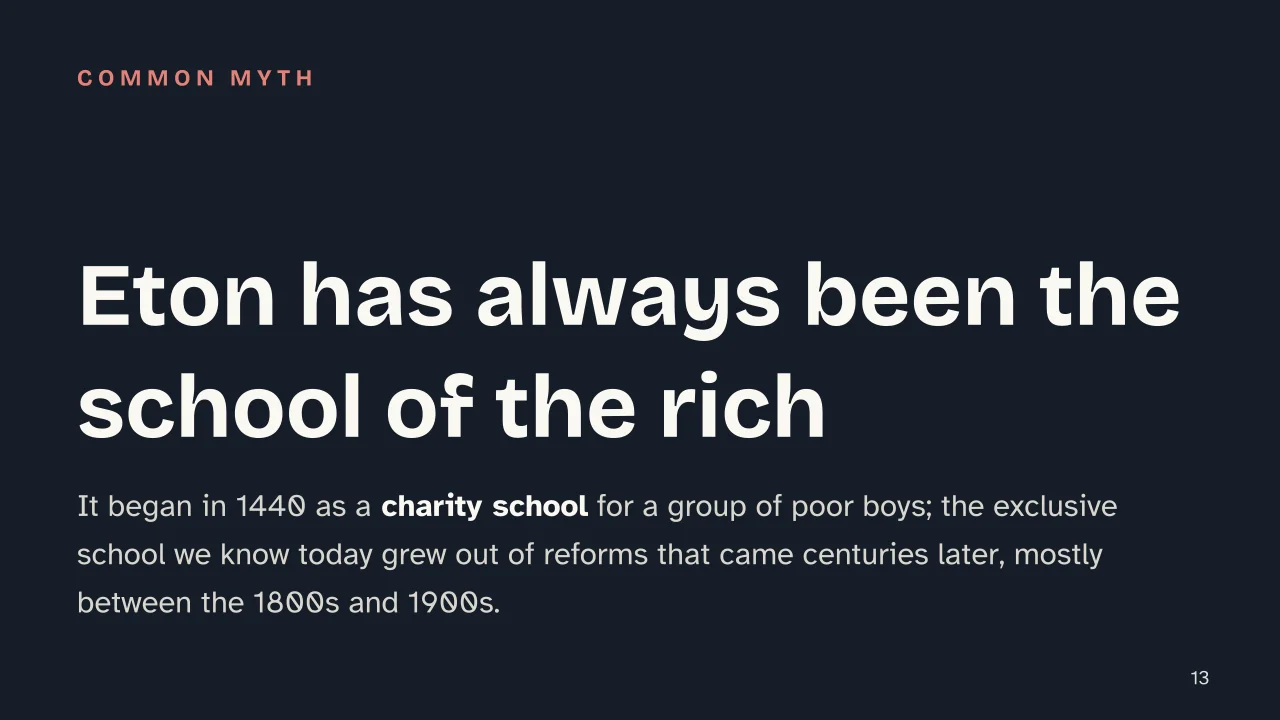
✗ Myth Eton College has always been a school reserved for the rich.
✓ Reality It was founded in 1440 as a charity school for a group of poor boys, the King's Scholars, educated free of charge. Fee-paying pupils, the oppidans, only arrived from 1443: the exclusive school we know today is the result of reforms that came centuries after the founding.
✗ Myth The school has always been called 'Eton College'.
✓ Reality The founding charter's official name was much longer, 'Kynge's College of Our Ladye of Eton besyde Windesore': 'Eton College' is the shortened form that took hold in common use over the centuries.
✗ Myth Admission to Eton has always been decided purely on academic merit.
✓ Reality For most of its history, family connections mattered a great deal; only during the 20th century did the school start weighing academic ability more heavily, and only from 2002 has every candidate, without exception, had to pass interviews, written tests and references.
Mind map
Drag the background to move around and the nodes to reposition them; use − and + to collapse and expand branches.
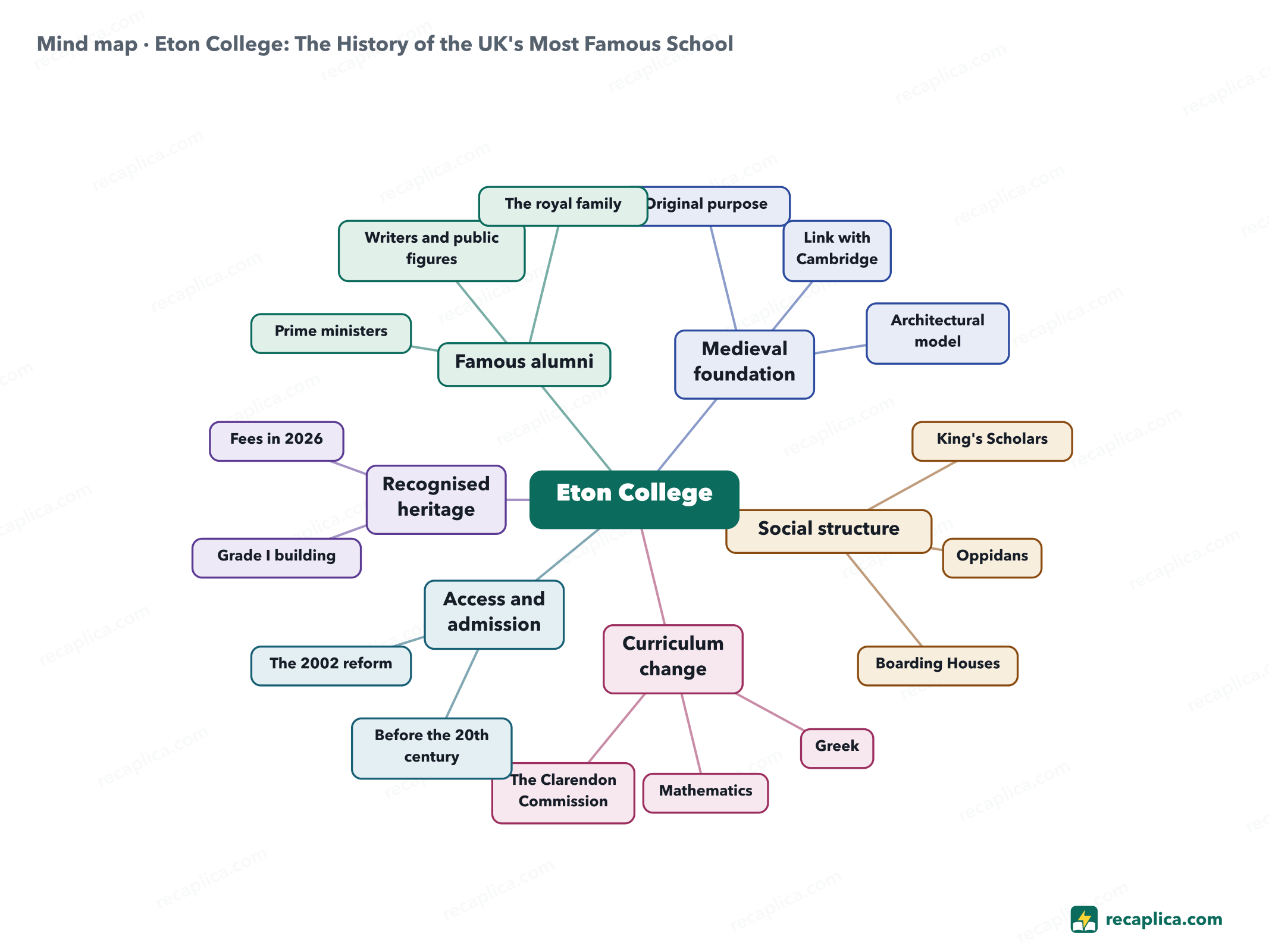
Original purposeKing's Scholars educated free of charge, by order of Henry VI in 1440
Link with CambridgeKing's College, Cambridge, founded in the same period, where Eton scholars went on to study
Architectural modelModelled on Winchester College and New College, Oxford, founded by William of Wykeham
Social structure
King's ScholarsThe foundation's scholarship boys, raised to 70 places in 1443
OppidansThe fee-paying pupils, distinct from the scholars since 1443
Boarding Houses24 houses, plus College where the King's Scholars live, according to the school's official site
Curriculum change
GreekAdded in the early 1600s
MathematicsThe first new subject, added in 1851
The Clarendon CommissionSignificant reforms launched in 1861
Access and admission
Before the 20th centuryFamily connections mattered more than academic ability
The 2002 reformInterviews, written tests and references for every candidate
Recognised heritage
Grade I buildingThe highest level of heritage protection in the United Kingdom
Fees in 2026Around £65,000 a year, among the highest in the United Kingdom
Famous alumni
Prime ministersMore than one in three, including Boris Johnson and David Cameron
Writers and public figuresGeorge Orwell, Hugh Laurie, Bear Grylls
The royal familyPrinces William, Harry and George
Quiz: test yourself
Answer the questions to check what you have learned: you get instant feedback and a short explanation.
Grade0/100/5
Answers: 1-A · 2-B · 3-A · 4-A · 5-A
Flashcards
Tap the card to flip it and check whether you remember the answer, then move to the next one.
1 / 8
Explain it in your own words
The ultimate test: if you can explain it in simple words, you've truly understood it. Write your explanation, then compare it with the Recap.
Your explanation is saved only on this device.
Eton College was founded in 1440 by King Henry VI, who wanted to give free board, lodging and schooling to a group of poor boys, the King's Scholars. Within a few years the foundation changed shape, began taking in fee-paying pupils too, and started a long transformation that, through reforms of its curriculum and admissions, turned it into one of the most prestigious and expensive schools in the United Kingdom. Its fame still rests largely on the prime ministers and public figures who studied there.
Frequently asked questions
When was Eton College founded?
Eton College was founded in 1440 by King Henry VI, who wanted to provide free education to a group of poor boys, the King's Scholars.
Why is Eton College famous?
It is one of the most prestigious schools in the United Kingdom: according to the sources, more than one in three British prime ministers studied there, including Boris Johnson and David Cameron, along with several members of the royal family, including Princes William, Harry and George.
How much does it cost to study at Eton College?
In 2026 annual fees stood at around £65,000, among the highest in the United Kingdom, according to an article published that September.
Who can enrol at Eton College?
Since 2002, every candidate has had to pass interviews, written tests and references to gain a place: the selection applies to every boy who applies, not only families with historical ties to the school.
What are the King's Scholars and the oppidans?
They are the school's two historical categories of pupils: the King's Scholars are the foundation's scholarship boys, raised to 70 places in 1443, while the oppidans are the fee-paying pupils, present since 1443 and over time became the largest group.
Every Recap goes through an independent review before publication.
Statistics, only if you say so
To learn which Recaps help most we would use Google Analytics, with aggregate, anonymous data. It starts only with your OK, and you can change your mind anytime. Privacy policy